28/03/2026
ABSTRACT
This study investigates the acceptance of banana-stem-based liner packaging as a sustainable alternative to plastic liners in Vietnam’s export banana supply chain, with a focus on farmers and traders as key upstream logistics actors. The study’s novelty lies in examining acceptance behavior at the production and trading stages, where packaging decisions directly affect the feasibility of plastic reduction in export logistics. Guided by behavioral perspectives from the Technology Acceptance Model (TAM) and the Theory of Planned Behavior (TPB), the study applies a structured questionnaire survey (n = 249) and descriptive statistical analysis to assess awareness, attitudes, adoption readiness, and key constraints. The results show that respondents exhibit high environmental awareness and positive attitudes toward biodegradable packaging, yet adoption remains limited. Cost sensitivity emerges as the primary barrier, while willingness to adopt is largely conditional on modest price premiums. Operational concerns and limited technical exposure further constrain experimentation, whereas institutional support, including financial incentives and technical guidance, is perceived as essential for scaling adoption. By linking behavioral acceptance with export logistics constraints, this study provides practical evidence to inform policy and supply chain strategies that support circular economy transitions and sustainable agricultural exports in Vietnam.
Keywords: Banana pseudostem, Circular economy, Sustainable packaging, Technology Acceptance Model.
JEL Classification: Q55, Q56, Q57, Q58.
1. INTRODUCTION
Vietnam’s agricultural sector plays a crucial role in the national economy, contributing significantly to export value and rural livelihoods. Among the country’s leading fruit exports, bananas stand out as one of the top commodities, with an annual production exceeding 2 million tons, of which approximately 30% is exported to key markets such as China, South Korea, and Japan [1]. However, the export banana supply chain continues to depend heavily on single-use plastic packaging materials, including polyethylene liners and foam pads, which contribute substantially to post-harvest waste and environmental pollution. According to the Ministry of Natural Resources and Environment, Vietnam generates more than 3.9 million tons of plastic waste annually, yet only about 15% is recycled, while the rest is discarded into the environment [2]. This situation underscores the urgent need for transitioning toward biodegradable and sustainable packaging solutions within the agricultural export sector.
In recent years, the utilization of agricultural by-products as eco-friendly materials has gained global attention, especially under the framework of the circular economy. Among these materials, banana pseudostems a by-product accounting for roughly 25% of total banana biomass have been identified as a potential raw material for producing biodegradable liner packaging. Research shows that banana-stem fibers contain about 60–65% cellulose and demonstrate strong mechanical and biodegradable properties, making them suitable substitutes for plastic in fruit packaging [3]. Adopting such materials not only reduces plastic waste but also enhances the economic value of agricultural residues, contributing to Vietnam’s national strategies for green growth and sustainable supply chain development.
Dong Nai Province provides a representative case for examining this transition. As one of Vietnam’s largest banana cultivation and export hubs, Dong Nai contributes significantly to national export volume while facing increasing environmental and market pressures to adopt sustainable practices. Yet, the uptake of biodegradable packaging solutions remains limited, constrained by factors such as cost, technical accessibility, and stakeholder awareness. Farmers and traders the core actors in production, packaging, and distribution play decisive roles in determining whether green packaging innovations can be successfully integrated into the supply chain. Previous studies [4] indicate that cost sensitivity, environmental awareness, and operational convenience are among the primary barriers to adopting biodegradable materials in Vietnam’s agricultural sector.
Despite growing attention to sustainable packaging, few empirical studies have investigated the acceptance behavior of upstream stakeholders, particularly farmers and traders, within the agricultural export context. Most existing research has focused on consumer perception or the technical development of biobased materials, leaving a significant gap in understanding behavioral acceptance and practical readiness within supply chains. Addressing this gap is essential to developing effective policy frameworks and market incentives for green transition.
Therefore, this study aims to: (i) assess the current awareness, attitudes, and acceptance levels of farmers and traders toward banana-stem-based liner packaging in the export banana supply chain in Dong Nai Province; (ii) identify and describe the factors influencing their willingness to adopt biodegradable packaging; (iii) propose policy and managerial recommendations to promote sustainable packaging adoption consistent with Vietnam’s circular economy objectives. The study provides empirical evidence through descriptive analysis of stakeholder perceptions and practical insights to inform the promotion of environmentally friendly packaging within Vietnam’s agricultural export industry.
2. METHODOLOGY
2.1. Research Area and Participants and Sampling
This study was conducted in Trang Bom, Long Khanh, and Cam My districts of Dong Nai Province, which together represent the core banana cultivation and export zones in southern Vietnam [5]. As illustrated in Figure 1, these districts are strategically located within a region characterized by large-scale banana production, favorable agro-climatic conditions, and well-developed transport connections to Ho Chi Minh City and major export gateways. Dong Nai plays a key role in supplying export-oriented bananas to international markets such as China, South Korea, and Japan.
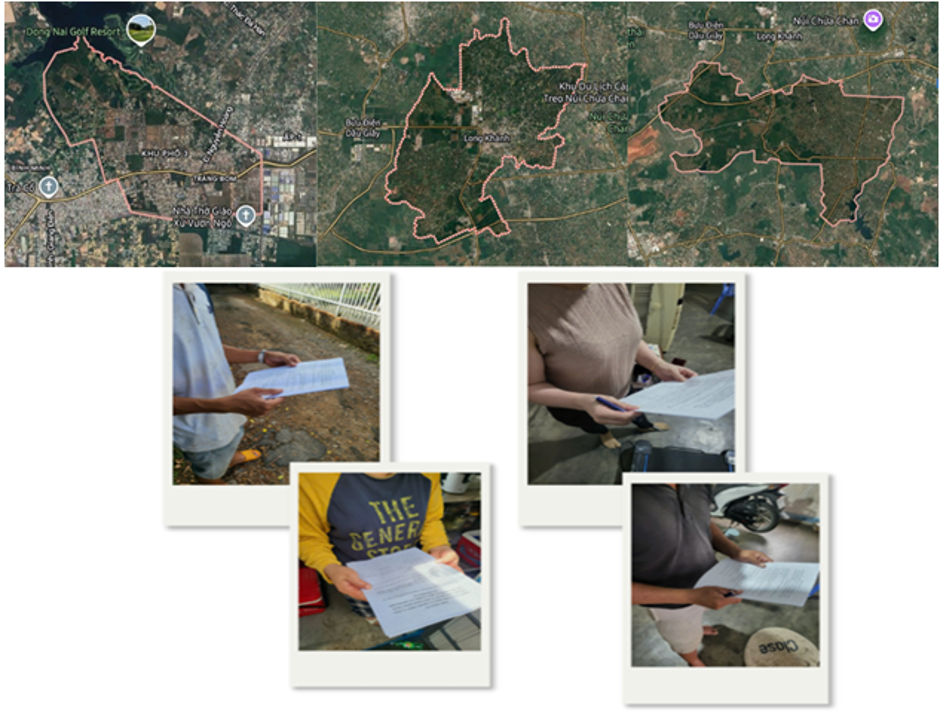 Figure 1. Research area with Trang Bom, Long Khanh, and Cam My districts (former) on the new map of Vinh Long province (after the 2025 merger)
Dong Nai Province currently has more than 13,000 hectares of banana plantations, with Trang Bom, Long Khanh, and Cam My accounting for the largest production shares. The area produces both traditional and export-grade banana varieties, including Cavendish and La Ba, which are widely used in international trade. The concentration of cultivation, harvesting, and post-harvest handling activities in these districts makes them representative of the upstream segment of the export banana supply chain.
The survey targeted banana farmers and traders who are directly involved in production, packaging, and distribution for export markets. A total of 249 valid questionnaires were collected, comprising 102 respondents from Trang Bom, 84 from Long Khanh, and 63 from Cam My. Focusing on these stakeholder groups is methodologically appropriate, as farmers and traders play a decisive role in operational decisions related to packaging practices. This sampling strategy provides a relevant empirical basis for assessing awareness, attitudes, and acceptance of banana-stem-based liner packaging within an export-oriented supply chain context.
2.2. Data Collection
The questionnaire was developed based on established behavioral frameworks, drawing primarily on the Technology Acceptance Model and the Theory of Planned Behavior to capture key determinants of technology and innovation acceptance in sustainability contexts [6, 7]. The survey instrument was designed to collect both socioeconomic information and perceptual data related to the acceptance of banana-stem-based liner packaging among upstream actors in the export banana supply chain.
Data were collected through face-to-face structured interviews with banana farmers and traders in Trang Bom, Long Khanh, and Cam My districts between August and December, 2025. This approach was chosen to ensure data reliability and to facilitate clear explanation of questionnaire items, particularly for respondents with limited prior exposure to biodegradable packaging technologies.
The questionnaire comprised five thematic components reflecting the main dimensions influencing acceptance behavior. These included environmental awareness related to plastic waste and ecological impacts, economic considerations concerning cost and perceived benefits, usability and durability of the packaging material in practical operations, overall attitudes and willingness to adopt the innovation, and perceptions of policy support and access to information or technical guidance. Together, these components were designed to capture how environmental, economic, technical, and institutional factors shape stakeholders’ acceptance of banana-stem-based liner packaging within an export-oriented supply chain.
2.3. Data Analysis
This study employed both primary and secondary data to analyze acceptance behavior toward banana-stem-based liner packaging in Dong Nai’s export banana supply chain. Secondary data from national agricultural and export reports were used to contextualize the role of bananas within Vietnam’s export economy [8].
Primary survey data were processed and analyzed using SPSS version 20. The analysis focused on descriptive statistical techniques to summarize respondents’ characteristics, perceptions, and acceptance levels across the five thematic dimensions. Key indicators included frequency distributions, percentages, mean values, and standard deviations. Graphical tools such as bar charts, pie charts, and boxplots were employed to visualize demographic patterns and perceptual differences.
In addition, comparative descriptive analysis was conducted to examine differences between farmers and traders in terms of awareness, cost sensitivity, and readiness to adopt biodegradable packaging. This analytical approach provides a clear empirical overview of behavioral patterns and socioeconomic drivers influencing the early-stage adoption of sustainable packaging solutions in Vietnam’s export banana supply chain.
3. RESULTS AND DISCUSSION
3.1. Descriptive statistics of respondents
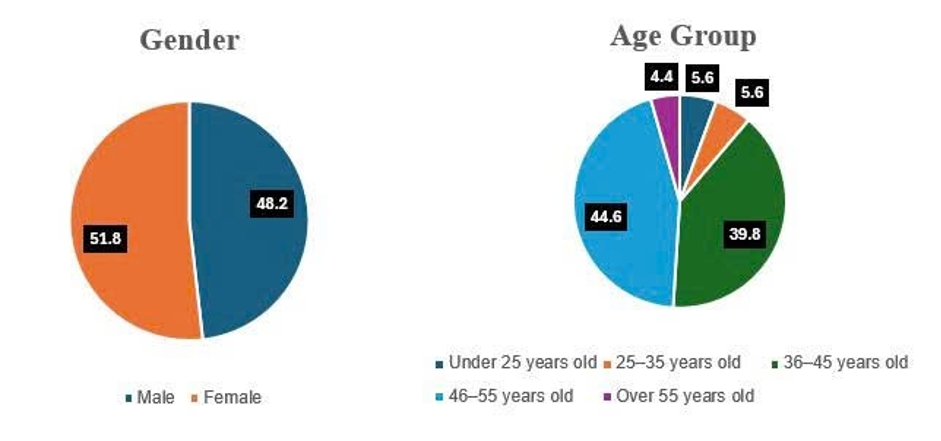 Figure 2. Gender and age group distribution of respondents in the survey sample (n = 249)
The descriptive statistics indicate that the survey sample is well aligned with the study’s objective of examining stakeholder acceptance of biodegradable liner packaging within export-oriented logistics. As shown in Figure 2, the gender distribution of respondents is relatively balanced, with females accounting for 51.8% and males for 48.2% of the sample. This balanced representation suggests that decision-making related to banana production, packaging, and trading in Dong Nai Province is not strongly gender-biased, thereby enhancing the reliability of behavioral insights related to sustainable packaging adoption across the supply chain.
The age structure of respondents further reflects the relevance of the sample to logistics-related decision processes. The dominant age groups are 46–55 years (44.6%) and 36–45 years (39.8%), indicating that the majority of respondents are mature and experienced actors who are actively involved in operational and managerial decisions within the banana export chain. Younger respondents under 25 years old and those aged 25–35 years account for smaller proportions, while respondents over 55 years old represent a minor share. This age distribution suggests that acceptance perceptions captured in the survey largely reflect the views of stakeholders with substantial practical experience and direct responsibility for logistics and packaging choices, rather than speculative or short-term perspectives.
As illustrated in Figure 3, most respondents identify their main role as banana farmers (83.5%), followed by purchasing traders (15.7%), while cooperative managers and other roles represent a very small proportion (0.8%). This structure highlights the production-driven nature of the export banana supply chain in Dong Nai Province, where upstream actors play a decisive role in post-harvest handling and initial packaging decisions. The inclusion of traders remains critical, as they serve as the link between farm-level practices and export logistics requirements, particularly regarding packaging standards and market compliance.
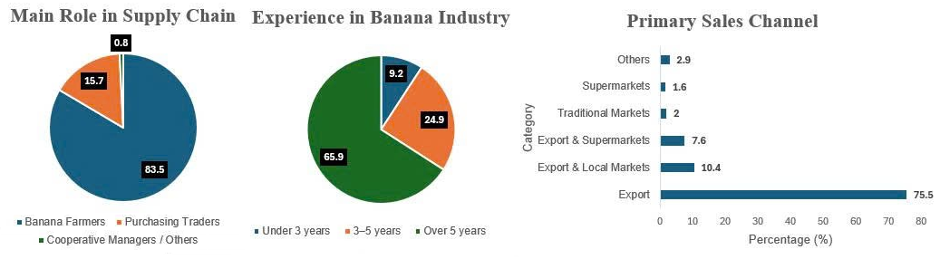 Figure 3. Main role of respondents, respondents’ experience and primary sales channels in the banana export supply chain (n = 249)
Regarding experience in the banana industry, a substantial majority of respondents (65.9%) report more than five years of involvement, while 24.9% have three to five years of experience and only 9.2% have less than three years. This high level of experience indicates that respondents possess deep familiarity with logistical practices, export requirements, and packaging-related challenges. Consequently, their assessments of banana-stem-based liner packaging are grounded in long-term operational realities rather than short-term experimentation.
The primary sales channel distribution further reinforces the export-oriented focus of the sample. Export markets dominate overwhelmingly, accounting for 75.5% of respondents’ primary sales channels, followed by mixed channels such as export combined with local markets (10.4%) and export combined with supermarkets (7.6%). Traditional markets, supermarkets alone, and other channels together represent less than 7% of the sample. This strong export orientation is particularly relevant to the study’s title and objectives, as export logistics impose stricter requirements on packaging performance, durability, and environmental compliance. The dominance of export channels ensures that acceptance perceptions captured in the survey are directly linked to the practical feasibility of reducing plastic use in export logistics rather than domestic distribution contexts.
Overall, the descriptive profile of respondents confirms that the sample is highly relevant to the study’s focus on plastic reduction in export logistics. The combination of experienced farmers and traders, strong export market orientation, and balanced demographic representation provides a robust empirical foundation for analyzing acceptance of banana-stem-based liner packaging as a sustainable alternative within export banana supply chains
3.2. Awareness and experience with banana-stem-based liner packaging
Figure 4 presents respondents’ awareness of banana-stem-based liner packaging and their prior experience with its use or trial. The results indicate that awareness of this biodegradable packaging material remains moderate among upstream actors in the export banana supply chain. Specifically, 44% of respondents reported being aware of banana-stem-based liner packaging, while the remaining 56% had no prior knowledge of this alternative material.
Despite this moderate level of awareness, practical exposure remains limited. Only 30% of respondents indicated that they had used or tested banana-stem-based liner packaging in actual operations, whereas 70% reported no prior experience. This gap between awareness and hands-on trial highlights an early-stage adoption pattern, in which knowledge of the innovation has not yet translated into widespread practical application.
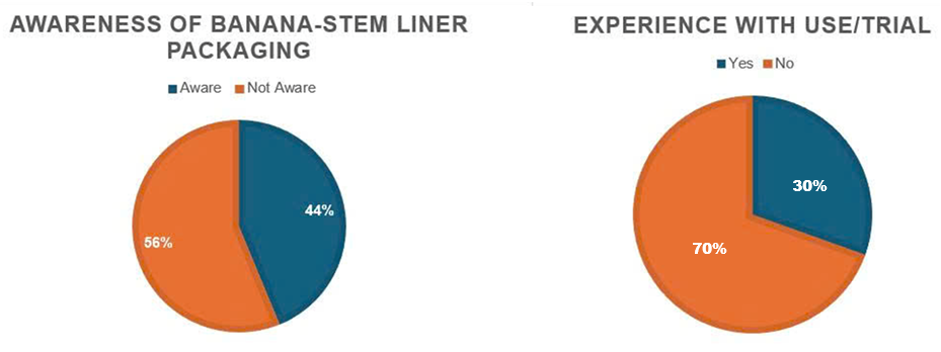 Figure 4. Respondents’ awareness of banana-stem-based liner packaging and the use or trial of banana-stem-based liner packaging (n = 249).
From a logistics perspective, these findings are particularly relevant. Export-oriented supply chains typically impose strict requirements on packaging performance, reliability, and cost efficiency. The relatively low trial rate suggests that, although environmental considerations are increasingly recognized, operational uncertainty and risk perception continue to constrain experimentation with alternative packaging materials in export logistics. Farmers and traders may be reluctant to test biodegradable liners without clear evidence of durability, compatibility with export standards, and economic feasibility.
Overall, the combined awareness and experience profiles indicate that banana-stem-based liner packaging is currently positioned at a preliminary transition stage within export banana logistics. The results support the study’s focus on “toward plastic reduction”, emphasizing that further diffusion of this solution will depend not only on raising awareness but also on expanding pilot trials, technical demonstrations, and institutional support to reduce perceived operational risks in export supply chains
3.3. Awareness, perception, and adoption readiness
The results presented in Table 1 reveal a clear distinction between respondents’ general environmental consciousness and their stage of engagement with banana-stem-based liner packaging in export logistics. While a large majority of farmers and traders strongly acknowledge the role of biodegradable packaging in reducing plastic waste, specific awareness of banana-stem-based liners remains moderate, and hands-on experience is limited. This pattern indicates that plastic reduction is widely accepted as a sustainability objective, but material-specific solutions have not yet been fully integrated into routine export logistics practices.
The gap between awareness and experience is particularly relevant in an export-oriented supply chain context, where packaging decisions are closely linked to operational risk, cost efficiency, and compliance with market standards. Traders exhibit slightly higher technical understanding and trial experience than farmers, reflecting their closer interaction with export requirements and sustainability-driven buyer expectations. In contrast, farmers tend to associate environmental responsibility with broader practices rather than with the adoption of new packaging materials, suggesting a need for targeted technical communication and demonstration at the production level.
Table 1. Awareness, attitudes, and adoption readiness toward banana-stem-based liner packaging among farmers and traders (n = 249)
|
Indicator |
Description |
Farmer (%) |
Trader (%) |
Overall (%) |
Mean |
SD |
Notes |
|
Awareness and environmental perception |
|||||||
|
Awareness of banana-stem-based packaging |
Respondents who have heard about biodegradable banana-stem packaging |
42 |
46 |
43.8 |
— |
— |
Awareness is moderate; most found it “eco-friendly but unfamiliar.” |
|
Experience with use/trial |
Respondents who have used or tested banana-stem packaging |
29 |
33 |
30.5 |
— |
— |
Limited trial use; mainly among export-oriented farmers. |
|
Agreement that biodegradable packaging reduces plastic waste |
Percentage agreeing or strongly agreeing |
>80% |
>80% |
≈82.3 |
— |
— |
Reflects strong environmental awareness. |
|
Environmental awareness (EA) |
Likert-scale (1–5) average score on eco-consciousness items |
— |
— |
4.158 |
0.777 |
High awareness, low dispersion (SD<1). |
|
|
Technical understanding gap |
Perceived knowledge difference between farmers and traders |
— |
— |
Slight |
— |
— |
Traders show marginally higher technical understanding. |
|
Attitude and willingness to adopt Banana-stem-based packaging |
|||||||
|
Positive attitude toward biodegradable packaging |
Reflects respondents’ favorable evaluation of biodegradable packaging as an environmentally responsible alternative in export logistics. |
83 |
88 |
85 |
3.97 |
0.87 |
Reflects favorable perception and pro-environmental mindset. |
|
Willingness to test or adopt in practice |
Indicates respondents’ readiness to experiment with or gradually implement biodegradable liner packaging in real operational settings |
61 |
65 |
63 |
4.06 |
0.83 |
Indicates readiness for gradual adoption. |
|
Main motivation: environmental protection |
Captures the primary driver of adoption, emphasizing concern over plastic waste reduction and environmental sustainability |
79 |
81 |
80 |
— |
— |
Sustainability awareness as key driver. |
|
Secondary motivation: improved product image |
Represents the perceived potential of biodegradable packaging to enhance product reputation and export market competitiveness |
68 |
74 |
71 |
— |
— |
Market-oriented perception, linked to export quality. |
Attitudinal indicators further suggest that psychological readiness for plastic reduction already exists. High levels of positive attitudes and willingness to test or gradually adopt biodegradable liners indicate openness to change, especially when adoption is framed as incremental rather than immediate. Environmental protection emerges as the dominant motivation, while improved product image and export competitiveness act as reinforcing incentives. Together, these motivations highlight that sustainability considerations are not only value-driven but also strategically linked to market positioning in export logistics.
Overall, the findings in Table 1 support the notion that the banana export supply chain is positioned at a transitional stage toward plastic reduction. Stakeholders demonstrate strong environmental awareness and favorable attitudes, yet the movement from intention to widespread operational adoption remains constrained by limited experience and perceived risks. These results underscore the importance of facilitating practical trials, knowledge transfer, and confidence-building mechanisms to translate sustainability awareness into tangible changes in export logistics practices.
3.4. Economic, operational, and institutional constraints
The results in Table 2 highlight that the transition toward plastic reduction in export logistics is constrained primarily by economic, operational, and institutional factors rather than by lack of awareness or unfavorable attitudes. Cost considerations emerge as the most immediate barrier, with a substantial proportion of both farmers and traders perceiving biodegradable liner packaging as more expensive than conventional plastic alternatives. This perception reinforces the role of price sensitivity in shaping packaging decisions within export-oriented supply chains, where margins are closely monitored and cost increases translate directly into competitiveness risks.
Table 2. Economic, operational, and institutional constraints affecting the adoption of banana-stem-based liner packaging in export logistics (n = 249)
|
Indicator |
Farmer (%) |
Trader (%) |
Overall (%) |
Mean (SD) |
Interpretation |
|
Economic and cost perceptions |
|||||
|
Perceived high cost of biodegradable packaging |
62 |
57 |
60 |
— |
Cost remains a major adoption barrier for both groups. |
|
Willing to use if price ≤10% higher than plastic |
44 |
47 |
45 |
— |
Indicates conditional acceptance depending on price sensitivity. |
|
Perceived usefulness (PU) – Mean (SD) |
— |
— |
4.182 (0.908) |
— |
Reflects belief in long-term economic value and product quality. |
|
Relative advantage (RA) – Mean (SD) |
— |
— |
4.067 (0.840) |
— |
Suggests perceived competitiveness and added export value. |
|
Usability and convenience of banana-stem-based packaging |
|||||
|
Rated “easy to use” for packaging |
70 |
75 |
72 |
4.095 (0.780) |
Majority find it user-friendly in operation and handling. |
|
Suggested improvement in durability |
16 |
21 |
18 |
— |
Traders express greater concern about material strength. |
|
Perceived fit for export logistics |
67 |
73 |
70 |
— |
Indicates moderate confidence in usability for transport processes. |
|
Policy and support factors for adoption of biodegradable packaging |
|||||
|
Expect price support or subsidy from State/Enterprise |
72 |
66 |
70 |
4.17 (0.84) |
Financial incentives seen as key to adoption. |
|
Expect technical training and guidance |
58 |
49 |
55 |
— |
Indicates need for practical know-how and capacity building. |
|
Suggest government policy to promote bio-packaging purchase |
64 |
68 |
66 |
— |
Desire for institutional recognition and procurement incentives. |
|
Recommend guaranteed market output support |
59 |
63 |
61 |
— |
Reflects need for stable demand and risk reduction mechanisms. |
Despite this cost concern, conditional acceptance is evident. Nearly half of respondents expressed willingness to adopt banana-stem-based liner packaging if the price premium remained within a limited range compared to plastic packaging. High perceived usefulness and relative advantage scores further indicate that stakeholders recognize the long-term economic and reputational value of biodegradable liners, particularly in enhancing export image and compliance with sustainability-oriented market requirements. However, this perceived value has not yet fully compensated for short-term cost pressures.
Operational feasibility represents a second critical constraint. While most respondents rated banana-stem-based liners as easy to use and compatible with existing packing practices, concerns regarding durability and performance under long-distance transport persist, especially among traders who bear responsibility for post-harvest handling and export logistics reliability. Such concerns elevate perceived operational risk and discourage experimentation in high-stakes export contexts.
Institutional and policy-related factors play a decisive enabling role. Strong expectations for price support, technical training, and policy incentives reflect stakeholders’ demand for risk-sharing mechanisms and clearer institutional signals. Recommendations for guaranteed market support and government promotion of bio-packaging suggest that stable demand and coordinated policy frameworks are viewed as essential conditions for scaling adoption.
Together, these findings demonstrate that plastic reduction in export logistics is not limited by stakeholder resistance but by structural constraints embedded in cost structures, operational risk, and policy environments. Addressing these constraints through targeted financial incentives, technical capacity building, and institutional support is therefore critical to transforming sustainability intentions into practical packaging adoption within export banana supply chains.
3.5. Policy and managerial implications for promoting banana-stem-based liner packaging
Based on the empirical findings, this study proposes several policy and managerial implications to promote the adoption of banana-stem-based liner packaging in export logistics, consistent with Vietnam’s circular economy objectives.
First, targeted policy incentives are essential to address cost sensitivity, which emerged as the primary barrier to adoption. As shown in Table 2, approximately 70% of respondents expect financial support in the form of subsidies or price incentives. Therefore, government agencies could consider introducing temporary subsidies, preferential tax treatment, or green procurement programs for biodegradable packaging, particularly during the early adoption phase. Such measures would help reduce financial risks for farmers and traders while encouraging experimentation with sustainable packaging alternatives.
Second, institutional support mechanisms should focus on technical guidance and capacity building. Although most respondents perceive banana-stem-based liners as easy to use, concerns regarding durability and suitability for long-distance export logistics remain, especially among traders. Pilot demonstration projects, technical training programs, and collaboration between research institutions, packaging manufacturers, and export enterprises could help improve technical confidence and operational reliability.
Third, managerial coordination within the export banana supply chain plays a critical role in scaling adoption. Traders and exporting enterprises, who interact directly with international buyers, can act as intermediaries by communicating sustainability requirements and market expectations to farmers. Cooperative-based purchasing and collective packaging arrangements may further reduce costs through economies of scale while ensuring compliance with export standards.
Finally, the utilization of banana pseudostems as packaging material aligns closely with Vietnam’s circular economy strategy by transforming agricultural residues into value-added products and reducing plastic waste in export logistics. Integrating biodegradable packaging into national green growth and sustainable agriculture programs would strengthen policy coherence and create stronger market signals for long-term adoption.
4. CONCLUSION
This study provides empirical evidence on stakeholder acceptance of banana-stem-based liner packaging within an export-oriented banana supply chain, contributing to the emerging discourse on plastic reduction in agricultural logistics. By examining farmers’ and traders’ perceptions, the findings reveal a clear intention–behavior gap: while environmental awareness and positive attitudes toward biodegradable packaging are well established, actual adoption remains constrained by economic, operational, and institutional barriers. A key contribution of this study lies in identifying cost sensitivity as the dominant constraint in export logistics, despite high perceived usefulness and recognized environmental benefits. Adoption readiness is conditional rather than resistant, indicating that stakeholders are willing to transition toward plastic reduction when financial risks are mitigated and operational reliability is assured. Differences between farmers and traders further highlight the role of supply chain position in shaping adoption priorities, with traders placing greater emphasis on export competitiveness and policy support.
The results underscore that plastic reduction in export logistics is less a matter of changing attitudes than of enabling conditions. Effective transition requires coordinated interventions that combine cost-sharing mechanisms, technical guidance, and supportive policy frameworks. By situating biodegradable packaging adoption within real export logistics constraints, this study advances practical understanding of how circular economy solutions can move from awareness to implementation, supporting Vietnam’s broader goals for sustainable exports and green supply chain transformation.
Despite these contributions, several limitations should be acknowledged. First, the study relies primarily on descriptive statistical analysis and does not empirically test causal relationships among behavioral constructs derived from the Technology Acceptance Model or the Theory of Planned Behavior. Second, the empirical data were collected in Dong Nai Province, which, while representative of export-oriented banana production, may limit the generalizability of the findings to other regions or agricultural commodities in Vietnam. Third, the analysis focuses on stakeholders’ perceptions and self-reported acceptance, without incorporating life-cycle assessment or detailed cost benefit analysis of banana-stem-based liner packaging. Accordingly, the results should be interpreted as indicative insights into early-stage adoption rather than definitive evaluations of environmental or economic performance.
Future research could build upon this study in several directions. Quantitative modeling approaches, such as regression analysis or structural equation modeling, could be employed to examine causal relationships among awareness, attitudes, perceived usefulness, and adoption intention. Expanding the scope of analysis to include exporters, packaging manufacturers, and international buyers would provide a more comprehensive perspective on supply chain dynamics and market-driven sustainability requirements. In addition, integrating life-cycle assessment and economic evaluation would offer deeper insights into the environmental effectiveness and financial viability of banana-stem-based packaging, thereby strengthening the evidence base for policy design and investment decisions.
ACKNOWLEDGMENTS
The author also wishes to thank the farmers and traders in Trang Bom, Long Khanh, and Cam My districts, Dong Nai Province, for their kind cooperation during the survey and data collection. This research was supported by Nguyen Tat Thanh University, Ho Chi Minh City, Vietnam. *Corresponding author: tthanh@ntt.edu.vn
Tran Pat Denh1, Tran Đong Sun1, Tran Hoang Cam Tu1, Đo Vinh Đuong2,3, Tran Thanh2,3*
1Faculty of Business Administration, Nguyen Tat Thanh University
2Institute of Interdisciplinary Sciences (IIS), Nguyen Tat Thanh University
3Center for Hi-Tech Development, Nguyen Tat Thanh University
REFERENCES
1. P. Van Kiem and T. T. T. J. J. o. T. S. Huong, "Circular supply chain: Situation and implementation solutions for agricultural products in Vietnam," vol. 11, no. 1, pp. 51-63, 2023.
2. G. P. Thi, T. N. Trung, S. Herat, T. N. J. I. J. o. E. S. Thanh, and S. Development, "Management of marine plastic waste generated from land-based sources in Viet Nam: Problems, constraints, and solutions," vol. 6, no. 1, pp. 63-74, 2021.
3. M. Akter, M. H. Uddin, I. S. J. J. o. R. P. Tania, and Composites, "Biocomposites based on natural fibers and polymers: A review on properties and potential applications," vol. 41, no. 17-18, pp. 705-742, 2022.
4. M. H. Nguyen, A. K. Trinh, K. T. Tran, and T. H. M. J. J. o. G. R. Nguyen, "Does sustainability marketing in the Vietnamese agri-food sector foster consumer brand engagement? The moderating role of brand reputation," 2025.
5. N. V. Phuong, D. Q. Giam, V. T. J. A. J. o. A. E. Hai, Economics, and Sociology, "Marketing Activities in the Fruit Industry: Case Study of Banana in Khoai Chau District, Hung Yen Province, Vietnam," vol. 39, no. 9, pp. 42-52, 2021.
6. I. Ajzen, "The theory of planned behaviour. Organizational behaviour and human decision processes, 50 (2), 179-211," ed, 1991.
7. F. D. J. M. q. Davis, "Perceived Usefulness, Perceived Ease of Use and User Acceptance of Information Technology," 1989.
8. P. T. Nguyen, "The impact of technical barriers to trade on Vietnam's fruit and vegetable exports to key markets," Journal of International Logistics and Trade, pp. 1-16, 2025.