
28/03/2026
Abstract
Although the bottled beverage market in Vietnam is expanding rapidly, a national regulation for Radon-222 (222Rn) control remains absent, leaving a critical gap in radiological safety management. This study assesses 222Rn activity and associated radiological risks in 20 commercial bottled beverages in Vietnam, including mineral, purified, and functional waters. Using a RAD7 detector, radon levels were quantified, and annual effective doses (E) for adults, children, and infants were estimated via ingestion and inhalation pathways. Results show 222Rn concentrations from 0.002 to 0.122 Bq/L (mean: 0.015 Bq/L), significantly below WHO/EU guidelines (100 Bq/L). Total E values ranged from 0.091 to 1.000 µSv/y. Although infants are the most susceptible group, their maximum exposure remained below 1% of the 100 µSv/y threshold. The findings confirm these beverages are radiologically safe, likely due to industrial processing and natural decay during the supply chain. This research establishes baseline data for radioactivity monitoring and verifies no discernible health threat to consumers from 222Rn in the evaluated products.
Keywords: 222Rn, annual effective dose, bottled water, public health, radiological risk.
JEL Classification: Q51, Q52, Q55, Q57.
1. INTRODUCTION
Water is an indispensable resource for the sustenance of all terrestrial life. However, it also serves as a significant environmental medium for the transport of natural radionuclides, including Uranium (238U), Thorium (232Th), Radium (226Rn) and their subsequent progeny [1]. Among these, Radon-222 (222Rn) a colorless, odorless noble gas with a half-life of 3.82 days emerges as a primary radiological concern. Produced through the alpha decay of 226Rn within the primordial uranium series, radon and its short-lived decay products are capable of delivering significant internal radiation doses to human tissues and organs upon entry into the body [2].
The health risks associated with 222Rn in drinking water are twofold, involving both inhalation and ingestion pathways [3]. When bottled water is consumed, dissolved radon can diffuse into and penetrate the gastric wall [4]. Within this localized environment, the subsequent emission of high-linear energy transfer (LET) alpha particles directly bombards the nuclei of gastric epithelial cells. This process induces chromosomal aberrations and disrupts cellular division mechanisms, significantly elevating the risk of gastrointestinal malignancies. Furthermore, according to the World Health Organization (WHO), which estimates an average daily fluid intake of approximately two liters for adults, a portion of the ingested radon is absorbed into the bloodstream and systemic circulation, distributing the radiological burden to other vital organs.
In recent years, the consumption of bottled water has experienced a dramatic surge in Vietnam, particularly in urban centers and among higher-income households [5]. This shift is driven by rapid urbanization and the perceived instability of municipal tap water quality. Since many bottled water brands utilize groundwater extracted from deep aquifers often associated with tectonic faults and specific geological formations the potential for elevated radon concentrations is inherently higher than in surface water sources [6]. Consequently, the radiological purity of these products has become a critical public health priority, requiring stringent verification to mitigate long-term health hazards such as lung and stomach cancer.
Despite the global recognition of this issue, regulatory frameworks remain varied. The WHO and the European Commission have established a guidance level of 100 Bq/L for 222Rn in drinking water and a recommended annual effective dose (AED) of 0.1 mSv/y. In contrast, the United States Environmental Protection Agency (US EPA) proposes a much more stringent limit of 11 Bq/L. Within Europe, regulations range from 20 to 1000 Bq/L [7], while the Italian National Health Council specifically advises that mineral water for infants should not exceed 32 Bq/L [8, 9, 10]. Notably, Vietnam has yet to establish a national reference level for radon in drinking water, leaving a significant gap in the domestic radiological protection infrastructure [11].
The present study addresses this critical data deficit by evaluating 222Rn activity concentrations in diverse bottled water and beverage samples currently circulating in the Vietnamese market. By calculating the age-dependent annual effective doses for adults, children, and infants and benchmarking these results against international safety standards, this research provides essential empirical evidence. The findings aim to assist policymakers in establishing national safety guidelines and to inform the public regarding the radiological safety of their dietary water intake.
2. MATERIALS AND METHODS
2.1. Study subjects
The subjects of this radiological investigation comprised 20 distinct brands of commercially bottled water and functional beverages, representing the most prevalent products consumed in the Vietnamese retail market. The selection criteria were designed to capture a broad spectrum of the beverage industry, ranging from traditional natural mineral waters to modern functional drinks [12]. These samples were systematically categorized into four primary groups based on their hydrogeological origin and manufacturing processes: natural mineral waters extracted from deep aquifers, purified waters treated through advanced filtration and reverse osmosis (RO) systems, alkaline ionized waters, and functional electrolyte beverages including isotonic and ion-supply drinks [13]. This diversity in sample selection allows for a comprehensive evaluation of how different water sources and industrial treatments influence dissolved 222Rn activity concentrations.
All study materials were acquired in their original, factory-sealed polyethylene terephthalate (PET) containers to ensure that the measured radiological parameters reflect the state of the products as they reach the end consumer. The sample set included standard retail volumes (350 mL to 500 mL) and a large-scale 18.5 L carboy, providing a comparative basis for different packaging formats. Each product was meticulously documented by commercial nomenclature, manufacturing batch, and production date spanning a timeframe from mid-2024 to mid-2025 to account for potential variations in the supply chain and radioactive decay during storage.
To ensure the accuracy of the dissolved gas analysis, strict preservation protocols were implemented from the point of collection to the moment of measurement [14]. The hermetic seals of all containers were maintained intact until the commencement of the laboratory procedures, thereby preventing the premature exhalation of 222Rn gas and the subsequent disturbance of secular equilibrium between Radon and its short-lived progeny. This rigorous approach to sample integrity is essential for quantifying the true activity concentration that penetrates the gastrointestinal barrier upon ingestion, particularly for products derived from groundwater sources where tectonic activity and rock-water interactions may contribute to initial 222Rn enrichment.
2.2. Instrumentation and Measurement Procedures
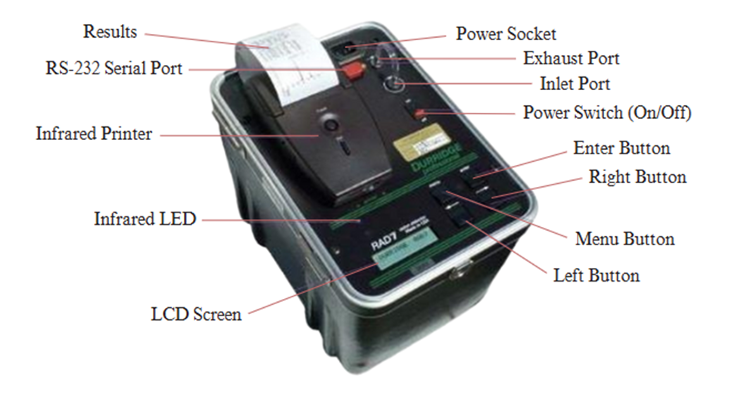
Figure 1. Main components of the RAD7 detector
The activity concentration of 222Rn in the collected beverage samples was quantified using a high-sensitivity RAD7 electronic radon detector (Durridge Co. Inc., USA). The RAD7 utilizes a solid-state, ion-implanted planar silicon detector to convert alpha radiation directly into an electrical signal. This instrument operates on the principle of electrostatic collection of alpha-emitting daughters, specifically 218Po and 214Po, and provides real-time alpha spectrometry to distinguish radon from thoron and background noise [14]. For liquid samples, the RAD7 was integrated with the RAD-H2O accessory, a specialized closed-loop aeration kit designed to efficiently strip radon gas from the water phase into the air loop for detection [16].
To determine the 222Rn activity concentration, a 250 mL sample aliquot was meticulously transferred into the specialized glass vial of the RAD-H2O system. This procedure was conducted with minimal agitation to suppress turbulence and prevent the premature degassing of dissolved radon. Following sample preparation, the system was hermetically sealed to establish a closed-loop air circuit connecting the sample vial to the RAD7 internal measurement chamber. The analytical sequence initiated with a 5-minute aeration phase, during which an integrated pump circulated air through the water column to achieve a dynamic gas-liquid equilibrium, effectively stripping the dissolved radon into the air loop. Subsequently, the radon gas was transported to the internal chamber where its alpha-emitting progeny were captured on the active surface of the solid-state semiconductor detector. To enhance statistical precision and minimize measurement uncertainty, each water sample was analyzed in triplicate, with each measurement cycle lasting for 30 minutes. This duration ensured sufficient alpha-event accumulation for stable activity quantification [17]. Upon the conclusion of the measurement cycles, the RAD7 system generated a summary report via an integrated infrared printer. This report provided the integrated 222Rnactivity concentration in Bq/m3, accounting for internal decay corrections and volume calibration factors. These raw values were subsequently recorded and converted into Bq/L for standardized comparison with international radiological safety guidelines and for the estimation of age-dependent effective doses.
To ensure the reliability and reproducibility of the results, the RAD7 detector underwent annual factory calibration at the Burridge laboratory against NIST-traceable standards [18]. Prior to each measurement session, a "purge" cycle using ambient air was conducted to reduce the internal humidity below 10% and to clear any residual activity (background) from the previous analysis. All measurements were performed at a controlled laboratory temperature to maintain the consistency of the radon partition coefficient between the water and air phases.
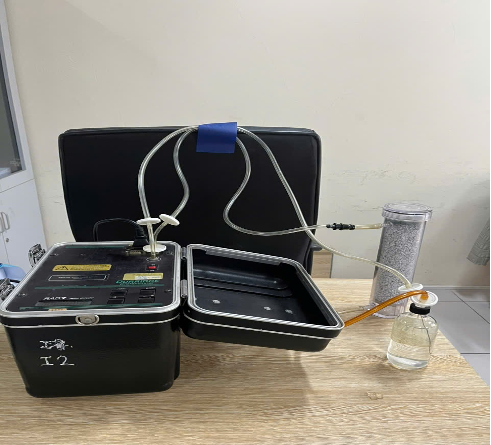
Figure 2. Experimental setup for 222Rn activity concentration measurement in water samples using the RAD7 detector coupled with the RAD-H2O aeration system
2.3. Estimation of annual committed effective from radon ingestion and inhalation
Ingesting water with elevated radon concentrations increases radiation exposure to the stomach. The utilization of groundwater for drinking and domestic purposes can lead to exposure not only through ingestion but also via the inhalation of radon gas released into the air from this water source.
Annual effective dose calculations resulting from the ingestion and inhalation of radon-containing water are determined using the following equations:
The annual affective dose from ingestion is calculated using the equation below:
Eing = CR x Win x Ding (1)
Where Eing is the effective dose of ingestion (µSv/y), CR is the concentration of Radon in water (Bq/L), Win is the annual water consumption (estimated annual water consumption is 730 (liters), Ding is the conversion factor for oral dose (3.5x10⁻⁹ Sv/Bq for stomach and 5x10⁻⁹ Sv/Bq for whole body). UNSCEAR has estimated that the conversion factor for ingestion of radon in water is 10-8 Sv/Bq for an adult, 2×10⁻⁸ Sv/Bq for a child and 7×10⁻⁸ Sv/Bq for an infant [19, 20].
The next (2) equation is used to calculate the effective dose for inhalation:
Einh = CR × Raw × F × O × DCFinh (2)
Where Einh is the effective dose of inhalation (µSv/y). Raw is the ratio of Radon in air to the Radon in water (10-4), “F” is equilibrium factor between Radon and its decay products (0.4), “O” is the mean indoor occupancy time belongs to per person (7000 ha-1), DCFinh is the dose conversion factor for Radon exposure [9nSv/(Bq.ha.L)] [21].
3. RESULTS AND DISCUSSION.
3.1. Assessment of radon activity concentrations
The 222Rn activity concentrations in 20 different drinking water samples commercially available in the Vietnamese market are presented in Table 1.
Table 1: Radon activity concentrations
|
No. |
Sample code |
Sample name |
Manufacturing Date |
222Rn Activity Concentration (Bq/L) |
|
1 |
B01 |
Vivant light mineralized bottled water |
28/06/2024 |
0.010 ± 0.003 |
|
2 |
B02 |
Satori purified water |
24/04/2024 |
0.005 ± 0.002 |
|
3 |
B03 |
ICY bottled drinking water |
25/07/2024 |
0.010 ± 0.004 |
|
4 |
B04 |
Dasani bottled drinking water |
5/9/2024 |
0.016 ± 0.004 |
|
5 |
B05 |
TH true water bottled drinking water |
12/8/2024 |
0.013 ± 0.003 |
|
6 |
B06 |
Topvalu AEON bottled drinking water |
31/07/2024 |
0.011 ± 0.003 |
|
7 |
B07 |
Jeju Volcanic bottled water |
10/6/2024 |
0.006 ± 0.002 |
|
8 |
B08 |
Aquarius sports drink (Isotonic beverage) |
30/07/2025 |
0.005 ± 0.002 |
|
9 |
B09 |
Pocari Sweat ion-supply drink |
27/05/2025 |
0.004 ± 0.002 |
|
10 |
B10 |
Jirian Real Price non-carbonated natural mineral water |
11/11/2024 |
0.004 ± 0.002 |
|
11 |
B11 |
Good Mood yogurt-flavored functional water |
9/7/2025 |
0.009 ± 0.003 |
|
12 |
B12 |
Revive zero-calorie electrolyte beverage |
21/07/2025 |
0.016 ± 0.004 |
|
13 |
B13 |
Aquarius zero-calorie sports drink |
2/8/2025 |
0.019 ± 0.004 |
|
14 |
B14 |
Revive electrolyte beverage |
5/6/2025 |
0.005 ± 0.002 |
|
15 |
B15 |
Vikoda natural alkaline mineral water |
28/02/2025 |
0.012 ± 0.003 |
|
16 |
B16 |
Ocany alkaline ionized water |
26/05/2025 |
0.004 ± 0.002 |
|
17 |
B17 |
Evian non-carbonated natural mineral water |
30/12/2024 |
0.015 ± 0.004 |
|
18 |
B18 |
i-on Life alkaline ionized drinking water |
9/5/2025 |
0.016 ± 0.004 |
|
19 |
B19 |
La Vie natural mineral water (18.5L carboy) |
11/6/2025 |
0.122 ± 0.108 |
|
20 |
B20 |
Vinh Hao natural non-carbonated mineral water |
6/7/2025 |
0.002 ± 0.001 |
The activity concentrations 222Rn in 20 commercially available bottled water and beverage samples in Vietnam are summarized in the analysis. The 222Rn levels across all samples remained within a narrow range, from 0.002 ± 0.001 Bq/L (sample B20, Vinh Hao mineral water) to 0.122 ± 0.108 Bq/L (sample B19, La Vie 18.5 L carboy). The mean activity concentration for the entire dataset was calculated at 0.015 ± 0.026 Bq/L.
As shown in the data, the majority of the samples (95%) exhibited 222Rn concentrations below 0.020 Bq/L. The relatively higher value observed in sample B19 (0.122 Bq/L) compared to the rest of the cohort could be attributed to the source of the natural mineral water and the larger volume packaging (18.5 L), which may influence the degassing rate of Radon during the bottling process. However, even this maximum value is significantly lower than typical background levels found in groundwater.
The investigation into 222Rn activity in various commercial bottled waters and beverages demonstrates that all samples comply with international safety standards. The extremely low activity concentrations and the resulting annual effective doses confirm that these products are radiologically safe for human consumption. This data contributes to the national database on environmental radioactivity and provides public health assurance regarding the quality of the beverage industry [22].
3.2. Assessment of annual effective dose
Table 2: Assessment of annual effective dose for three distinct age groups: adults, children, and infants
|
No. |
Samples |
The effective dose of ingestion (µSv/y) |
The effective dose of Inhalation (µSv/y) |
Total (µSv/y) |
||||
|
Adults |
Children |
Infants |
Adults |
Children |
Infants |
|||
|
1 |
B01 |
0.071 ± 0.022 |
0.143 ± 0.045 |
0.499 ± 0.159 |
0.022 ± 0.006 |
0.092 ± 0.029 |
0.164 ± 0.051 |
0.521 ± 0.163 |
|
2 |
B02 |
0.039 ± 0.017 |
0.078 ± 0.033 |
0.274 ± 0.116 |
0.012 ± 0.005 |
0.050 ± 0.021 |
0.090 ± 0.038 |
0.286 ± 0.121 |
|
3 |
B03 |
0.076 ± 0.033 |
0.151 ± 0.065 |
0.530 ± 0.229 |
0.023 ± 0.009 |
0.098 ± 0.042 |
0.174 ± 0.075 |
0.553 ± 0.239 |
|
4 |
B04 |
0.119 ± 0.029 |
0.237 ± 0.058 |
0.830 ± 0.203 |
0.036 ± 0.008 |
0.154 ± 0.037 |
0.373 ± 0.067 |
0.866 ± 0.211 |
|
5 |
B05 |
0.092 ± 0.025 |
0.184 ± 0.050 |
0.643 ± 0.177 |
0.028 ± 0.007 |
0.119 ± 0.032 |
0.211 ± 0.058 |
0.671 ± 0.184 |
|
6 |
B06 |
0.079 ± 0.023 |
0.157 ± 0.047 |
0.551 ± 0.163 |
0.024 ± 0.007 |
0.103 ± 0.030 |
0.181 ± 0.054 |
0.575 ± 0.170 |
|
7 |
B07 |
0.042 ± 0.017 |
0.083 ± 0.034 |
0.291 ± 0.120 |
0.013 ± 0.005 |
0.054 ± 0.022 |
0.096 ± 0.039 |
0.304 ± 0.125 |
|
8 |
B08 |
0.034 ± 0.015 |
0.069 ± 0.031 |
0.241 ± 0.107 |
0.010 ± 0.004 |
0.045 ± 0.020 |
0.079 ± 0.035 |
0.251 ± 0.112 |
|
9 |
B09 |
0.029 ± 0.014 |
0.059 ± 0.028 |
0.206 ± 0.099 |
0.009 ± 0.004 |
0.038 ± 0.018 |
0.068 ± 0.032 |
0.215 ± 0.103 |
|
10 |
B10 |
0.030 ± 0.014 |
0.059 ± 0.029 |
0.208 ± 0.100 |
0.009 ± 0.004 |
0.039 ± 0.019 |
0.068 ± 0.033 |
0.217 ± 0.105 |
|
11 |
B11 |
0.065 ± 0.021 |
0.130 ± 0.042 |
0.455 ± 0.148 |
0.020 ± 0.006 |
0.085 ± 0.028 |
0.150 ± 0.049 |
0.475 ± 0.154 |
|
12 |
B12 |
0.118 ± 0.028 |
0.235 ± 0.057 |
0.823 ± 0.199 |
0.036 ± 0.008 |
0.153 ± 0.037 |
0.271 ± 0.066 |
0.859 ± 0.208 |
|
13 |
B13 |
0.137 ± 0.030 |
0.274 ± 0.062 |
0.958 ± 0.217 |
0.041 ± 0.009 |
0.178 ± 0.040 |
0.315 ± 0.071 |
1.000 ± 0.226 |
|
14 |
B14 |
0.035 ± 0.016 |
0.069 ± 0.032 |
0.243 ± 0.113 |
0.010 ± 0.005 |
0.045 ± 0.021 |
0.080 ± 0.037 |
0.253 ± 0.117 |
|
15 |
B15 |
0.084 ± 0.024 |
0.168 ± 0.048 |
0.589 ± 0.168 |
0.025 ± 0.007 |
0.110 ± 0.031 |
0.194 ± 0.055 |
0.615 ± 0.175 |
|
16 |
B16 |
0.032 ± 0.014 |
0.063 ± 0.030 |
0.222 ± 0.104 |
0.010 ± 0.004 |
0.041 ± 0.019 |
0.073 ± 0.034 |
0.231 ± 0.108 |
|
17 |
B17 |
0.109 ± 0.027 |
0.219 ± 0.055 |
0.766 ± 0.192 |
0.033 ± 0.008 |
0.142 ± 0.036 |
0.252 ± 0.063 |
0.799 ± 0.201 |
|
18 |
B18 |
0.119 ± 0.028 |
0.238 ± 0.058 |
0.833 ± 0.203 |
0.036 ± 0.009 |
0.155± 0.038 |
0.274 ± 0.067 |
0.869 ± 0.211 |
|
19 |
B19 |
0.117 ± 0.029 |
0.143 ± 0.066 |
0.818 ± 0.204 |
0.035 ± 0.009 |
0.152 ± 0.038 |
0.269 ± 0.067 |
0.853 ± 0.213 |
|
20 |
B20 |
0.043 ± 0.002
|
0.025 ± 0.014
|
0.089 ± 0.051
|
0.003 ± 0.002
|
0.016 ± 0.009
|
0.028 ± 0.017
|
0.091 ± 0.053
|
The annual effective dose due to the ingestion of 222Rn was estimated for three distinct age groups: adults, children, and infants. As presented in the data, the ingestion doses vary significantly across demographics due to different water consumption rates and age-dependent dose conversion factors.
The radiological risk to consumers was evaluated through two primary exposure pathways: ingestion of dissolved 222Rn and inhalation of Radon gas released from the beverage matrix during consumption. The annual effective dose (E) from ingestion exhibited significant age-dependent variations, primarily driven by the metabolic rates and consumption volumes specific to each demographic. For the adult population, the ingestion dose remained consistently low, ranging from 0.030 ± 0.014 to 0.137 ± 0.030 µSv/y. Conversely, the infant group demonstrated the highest susceptibility, with doses reaching a maximum of 0.958 ± 0.217 µSv/y in sample B13. This elevation in infants is a direct consequence of the higher dose conversion factors assigned to this age group, reflecting their greater biological sensitivity to internal radiation [23].
Parallel to ingestion, the inhalation pathway contributed a secondary portion to the total radiation profile. The data indicates that inhalation doses are systematically lower than ingestion doses across all samples. For instance, in the most active sample (B13), the adult inhalation dose was recorded at 0.041 ± 0.009 µSv/y, representing only a fraction of the total exposure. This finding underscores that while 222Rn is a volatile gas, the radiological burden from bottled beverages is predominantly internal, localized in the gastrointestinal tract rather than the pulmonary system.
The cumulative health risk, expressed as the total annual effective dose, serves as a critical benchmark for regulatory compliance. In this study, the total E values across all age groups and beverages ranged from 0.091 ± 0.053 to 1.000 ± 0.226 µSv/y. To contextualize these findings within a global safety framework, the results were benchmarked against the World Health Organization (WHO) recommended reference level of 100 µSv/y (0.1 mSv/y) for drinking water. All analyzed samples, including those derived from natural mineral sources and functional sports drinks, remained at least two orders of magnitude below this safety threshold. Furthermore, when compared to the global average natural background radiation of 2400 µSv/y reported by UNSCEAR, the maximum dose identified in this study is negligible (0.05%), indicating no significant incremental risk to the consumer.
Variations in 222Rn concentrations were observed between different product categories, reflecting the geological origin of the source water and the industrial processing techniques employed. Samples B19 and B13, characterized by higher activity levels, likely originate from deeper aquifers where rock-water interactions are more pronounced. In contrast, purified drinking waters (e.g., B20) showed near-minimal activity, which can be attributed to advanced filtration and aeration processes that effectively strip dissolved gases from the liquid. From a global perspective, the 222Rn levels in Vietnamese bottled beverages are substantially lower than those reported in certain European and North American regions, where values can exceed 10 Bq/L. The low activity observed here may be further influenced by the radioactive decay of 222Rn (T1/2 = 3.82 days) during the transit time between bottling and consumer purchase, which serves as a natural mitigation factor.
4. CONCLUSION
In summary, the comprehensive radiological profiling of the 20 beverage samples confirms their safety for human consumption across all life stages. The estimated effective doses for adults, children, and infants are well within the conservative limits established by international radiation protection authorities. These results provide empirical evidence that the commercial beverage market in the studied region maintains high radiological purity, posing no discernible health threat to the public. The study concludes that current manufacturing and sourcing practices are sufficient in maintaining 222Rn exposure at levels far below any regulatory concern. This study provides the empirical evidence necessary for policymakers to establish a national standard. The findings suggest that Vietnam can feasibly adopt the WHO guidance level of 100 Bq/L as a mandatory regulation. Implementing this standard would harmonize Vietnam’s radiological protection framework with international norms and ensure public safety, while the data confirms that such regulation would not impose compliance burdens on the domestic beverage industry.
Tran Thi Nhan
Faculty of New Energy, Electric Power University
REFERENCES
1. UNSCEAR, Sources and Effects of Ionizing Radiation, 2000. United Nations ISBN: 9789211422390.
2. ISO, Water quality - Radon-222 - Part 1: General principles, 2017. ISO 13164-1.
3. European Commission, Council Directive 2013/51/EURATOM on radioactive substances in water intended for human consumption, 2013. Official Journal of the European Union.
4. US EPA, Proposed Radon in Drinking Water Rule, 1999. Washington, DC: US EPA.
5. Khan, M.S., Srivastava, D.S., Azam, A., Applied Radiation and Isotopes, Study of radon concentration in ground water using RAD7, 2012. Vol. 70, pp. 670-675.
6. NIST, Standard Reference Materials for Radon Calibration, 2022. Maryland: NIST.
7. Chau, N.D., Michalec, B., Tuan, Q., Nukleonika, Radon activity concentration in mineral and drinking waters in Vietnam, 2011. Vol. 56, pp. 245-249.
8. Durridge Company Inc, RAD7 Radon Detector User Manual, 2021. Billerica, MA: Durridge.
9. Lucchetti, C., Soligo, M., Tuccimei, P., Journal of Radioanalytical and Nuclear Chemistry, Radon in infant bottled water: Comparison between glass and PET containers, 2023. Vol. 332, pp. 1580-1587.
10. ICRP, Protection Against Radon-222 at Home and at Work, 1993. ICRP Publication 65, Annals of the ICRP.
11. Huynh, N.G., Nguyen, V.T., Tran, T.D., Radiation Protection Dosimetry, Natural radioactivity in ground and surface water in Southern Vietnam, 2023. Vol. 199, pp. 412-420.
12. Long, S., Smith, V., Health Physics, Radon in bottled water – A review of international studies, 2018. Vol. 114, pp. 321-329.
13. Duggal, V., Mehra, R., Journal of Environmental Health Science and Engineering, A study of indoor radon levels and assessment of health risk, 2017. Vol. 15, No. 1.
14. Jobbágy, V., Altzitzoglou, T., Xuehui, N., Wong, H., Journal of Environmental Radioactivity, A survey of radon activity concentration in European bottled waters, 2017. Vol. 167, pp. 105-115.
15. Desideri, D., Roselli, C., Feduzza, M., Microchemical Journal, Radon in bottled mineral waters in Italy, 2015. Vol. 118, pp. 250-255.
16. Kumar, A., Kaur, M., Mehra, R., Solid State Phenomena, Measurement of radon concentration in drinking water in Himachal Pradesh, India, 2016. Vol. 238, pp. 141-147.
17. Sharma, N., Singh, J., Esakki, R., Spectrochimica Acta Part A: Molecular and Biomolecular Spectroscopy, Advanced spectroscopic techniques for radon detection in bottled beverages, 2024. Vol. 305, pp. 123-130.
18. Lane-Smith, D.R., Shefsky, S.I., Rapid radon-in-water measurement using an electrostatic collector, 1999. Billerica: Durridge.
19. Yoon, S.W., Lee, G., Kim, J., Nuclear Engineering and Technology, Evaluation of radon in bottled water and its impact on internal dose, 2020. Vol. 52, pp. 235-242.
20. Aleissa, K., Almasoud, I., Journal of Food, Agriculture and Environment, Radon concentration in bottled drinking water in Saudi Arabia, 2011. Vol. 9, pp. 741-745.
21. Przylibski, B.A., Science of The Total Environment, Radon in bottled mineral waters: Comparison with groundwater and assessment of health risk, 2020. Vol. 712, 136-145.
22. United Nations, UNSCEAR 2019 Report on Medical Exposure to Ionizing Radiation, 2019. New York: United Nations.
23. Le, T.L., Environmental Radioactivity Monitoring in Vietnam, 2022. Hanoi University of Science Thesis Work.