
11/12/2025
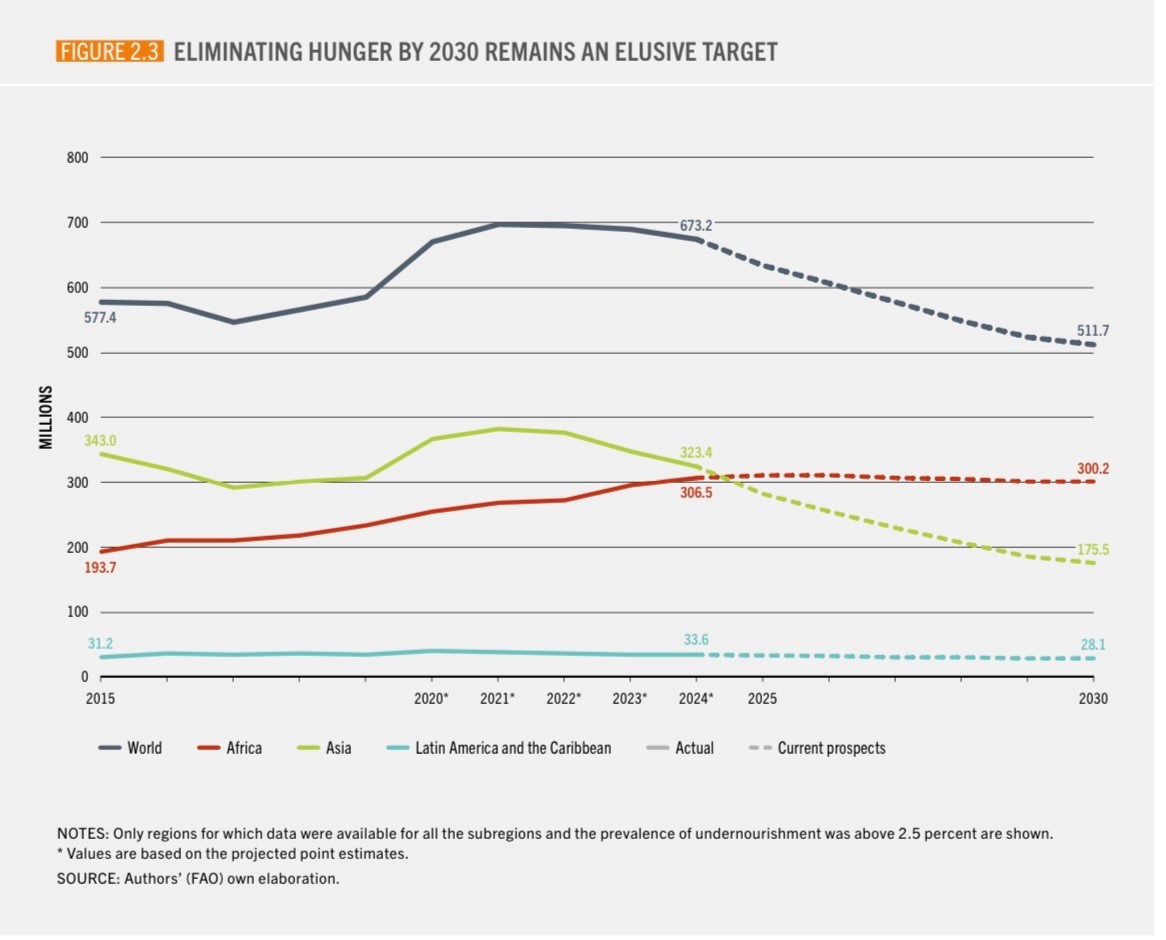
The 2025 edition of The State of Food Security and Nutrition in the World (SOFI) report, jointly produced by FAO, IFAD, UNICEF, WFP, and WHO, highlights persistent food price inflation as the defining macro-economic impediment to achieving Sustainable Development Goal (SDG) 2 (Zero Hunger). While the global prevalence of undernourishment saw a marginal decline to an estimated 8.2% in 2024 (approx. 673 million people), this modest progress is highly uneven. The report underscores that the affordability of a healthy diet is severely undermined, particularly in low-income countries, and calls for urgent, coordinated fiscal and monetary policy interventions alongside sustained investment in resilient agri-food systems. These efforts must be inclusive, context-specific and aligned with the needs and priorities of each country to address today’s interconnected challenges. They must also be equitable, delivering tangible benefits for groups such as small-scale producers, women, children, youth and Indigenous Peoples.

The report underscores that the affordability of a healthy diet is severely undermined
1. The discrepancy in global progress
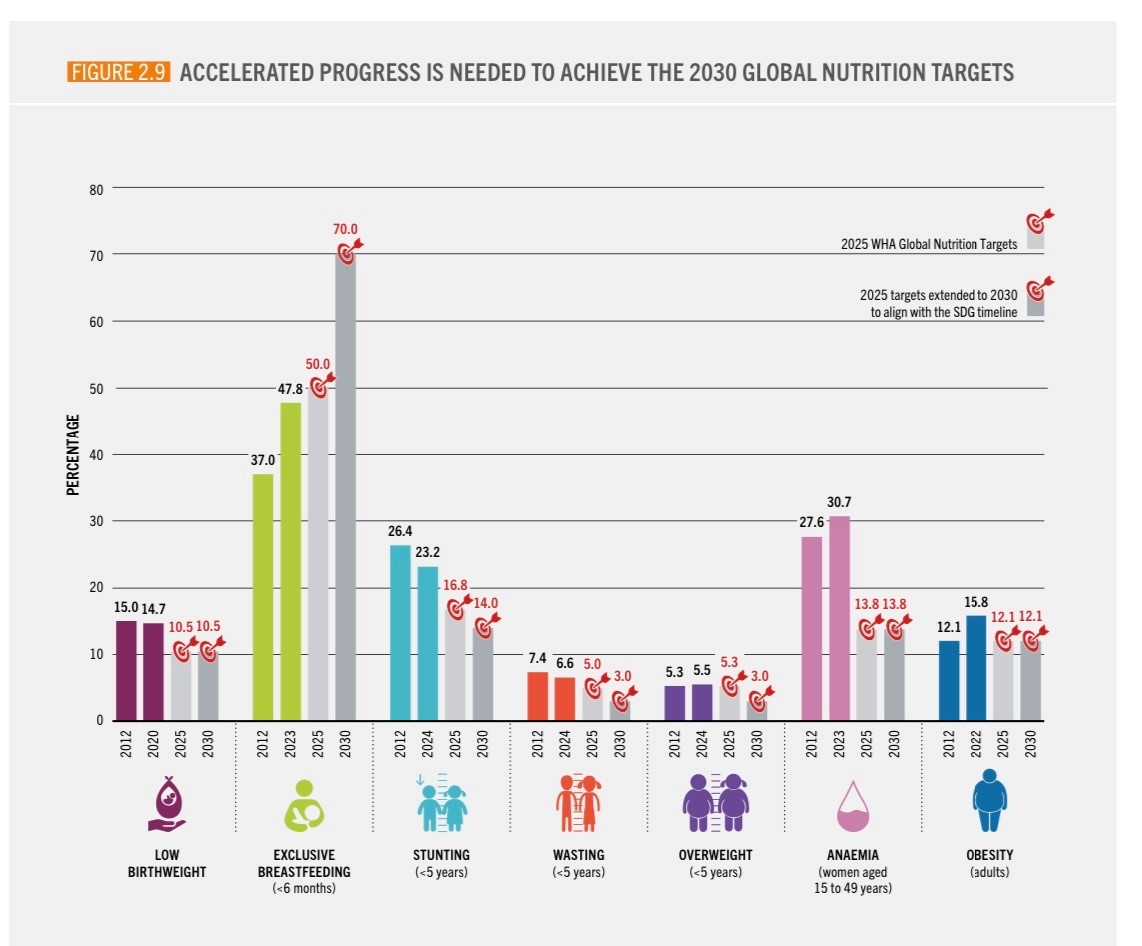
Despite the global hunger rate dropping for the second consecutive year since the peak of the COVID-19 pandemic, the world remains significantly off-track to eliminate hunger and malnutrition by 2030. This apparent improvement is overshadowed by critical regional disparities:
Africa and Western Asia: These regions continue to experience rising hunger rates. Africa's prevalence of undernourishment surpassed 20% in 2024, and projections indicate that by 2030, nearly 60% of the chronically hungry population worldwide will reside in Africa.
Geographic vulnerability: The prevalence of moderate or severe food insecurity remains consistently higher in rural areas (32.0%) compared to urban areas (23.9%), revealing persistent structural challenges in reaching smallholder farmers and remote communities.
Gender gap: The food insecurity gender gap, although showing some modest global narrowing, remains high, with prevalence rates consistently higher among women than men across all regions.
(Source: https://www.fao.org)
2. The dominant driver: Persistent food price inflation
The central theme of SOFI 2025 is the corrosive effect of sustained high food price inflation on the accessibility and affordability of healthy diets. SOFI 2025 analyses the root causes of recent food price inflation and its impact on global food security and nutrition. It specifically investigates how rising food prices have affected consumers’ disposable income and their ability to access food. The report also explores the effects of inflation across different food groups and examines changes in the affordability of healthy diets. Additionally, it highlights successful policy responses at the country level, identifying practical solutions to address the twin challenges of rising food prices and increasing levels of food insecurity and malnutrition. This 2025 edition provides policymakers with a suite of policies necessary for addressing food price inflation while advancing global progress towards ending hunger, food insecurity and all forms of malnutrition, and making healthy diets affordable for all.
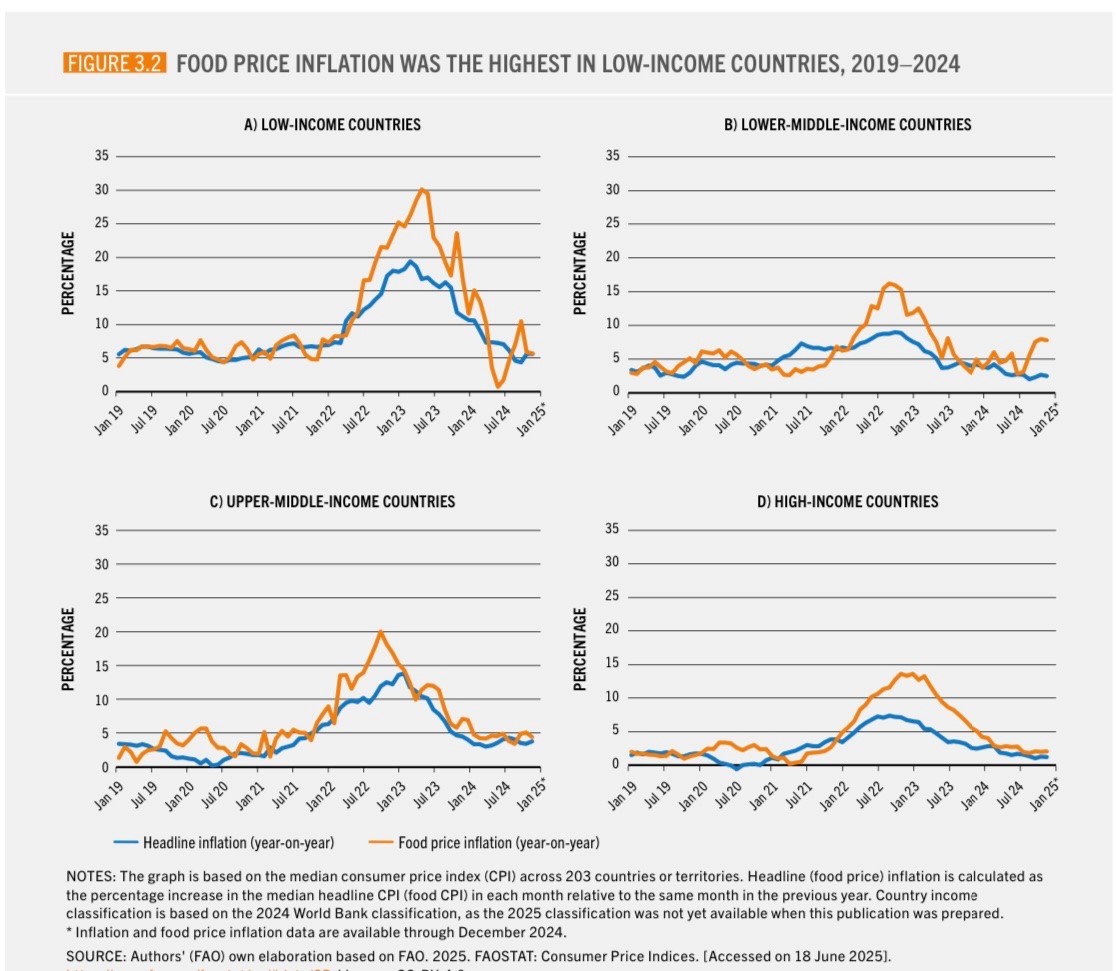
Inflationary pressure: Since 2020, food price inflation has consistently outpaced general (headline) inflation, reaching a peak gap of 5.1 percentage points in January 2023. This disproportionate increase exposes the fundamental vulnerabilities of global agri-food systems to external shocks.
Food price inflation has been particularly acute in low-income countries, where households often depend on markets for food supplies. Global median food price inflation rose significantly from 2.3 percent in December 2020 to 13.6 percent in January 2023, while low-income countries experienced an even steeper increase, with inflation hitting 30 percent in May 2023.
The global recovery in wages has been highly uneven. In some countries, wage growth has kept pace with rising food prices. However, in many others, especially those affected by conflict, real wages have continued to decline, making it increasingly challenging for households to afford essential food items. Low-income countries, which have experienced the highest rates of food price inflation, with a pronounced peak between mid-2022 and mid-2023, have faced increases in food insecurity.
Rising food prices can significantly impact households’ food security. A 10 percent increase in food prices is associated with a 3.5 percent rise in moderate or severe food insecurity and with a 1.8 percent increase in the proportion of individuals experiencing severe food insecurity. Structural and gender inequalities amplify the impact of food price inflation, particularly in countries with high income inequality. At its peak in January 2023, 65 percent of low-income countries and 61 percent of lower-middle-income countries (home to more than 1.5 billion people) faced rates of food price inflation above 10 percent, underscoring its potentially pervasive contribution to food insecurity.
Malnutrition link: New analysis in the report establishes a direct correlation between price hikes and acute malnutrition: a 10% increase in food prices is associated with a 2.7–4.3% rise in child wasting. Relative prices of different types of foods (by food group, level of processing and nutritional profile) appear, on average, to have been stable between 2011 and 2021 around the world. Nutrient-dense foods such as fruits and vegetables consistently have the highest prices per kilocalorie. In contrast, ultra-processed foods, in general, tend to have lower prices per kilocalorie than processed alternatives. Ultra-processed foods are increasingly displacing more nutrient-dense alternatives despite growing evidence of their adverse health impacts.
Inflation erodes household purchasing power, making it harder for families to afford essential goods and services. While real incomes are ultimately tied to workers’ productivity, wages and prices often adjust at different speeds in the short term, particularly as economies absorb external shocks and disruptions. This temporary misalignment can create significant hardships for households, even when long-term economic fundamentals remain stable. A growing body of evidence shows that even short-lived economic shocks.
Affordability crisis: Despite a slight global decline in the number of people unable to afford a healthy diet, the trend is increasing in many low- and lower-middle-income countries (excluding India), meaning the high cost of nutritious food is actively driving poor dietary outcomes. Conflict-affected countries have faced particularly acute challenges, as sustained declines in real wages have made it increasingly difficult for households to meet basic food needs.
As households experience temporary or more prolonged declines in their real incomes, they employ various strategies to cope with shocks. These include distress sales of assets, including productive capital; increased reliance on remittances from migrants; diversification of income sources; and reductions in spending on other important items. Evidence highlights the widespread nature of these strategies also across previous inflationary periods.
The impact of inflation varies across different countries and groups. In particular, food price inflation is more strongly associated with food insecurity in countries with higher levels of income inequality compared to those with lower inequality. In more unequal countries, where vulnerable populations are larger and social protection mechanisms are weaker, even modest food price increases can have disproportionately harmful effects on food security. These findings underscore the importance of addressing inequality as a critical factor influencing global food security trends
Rural populations face heightened vulnerability to food price inflation due to structural and economic constraints. Rising food prices can restrict access to diverse diets for vulnerable groups, particularly children. For infants and young children during the complementary feeding period, animal source foods, legumes, nuts and seeds, and fruits and vegetables are crucial for optimal growth and development. Yet, these foods are frequently missing from young children’s diets.
Recent food price inflation may have increased the risk of child wasting. Based on data from about 150 countries worldwide between 1983 and 2023, the analysis in this section suggests that a 10 percent rise in food prices is associated with a 2.7 to 4.3 percent increase in wasting prevalence and a 4.8 to 6.1 percent increase in severe wasting among children under five years of age. These findings underscore a pressing policy concern: the recent surge in global inflation may have worsened acute malnutrition, placing millions of children at heightened risk of severe health outcomes.
(Source: https://www.fao.org)
3. Policy road map for resilience and stability
The report issues a strong call for comprehensive, multi-sectoral policy actions that balance immediate relief with long-term systemic resilience:
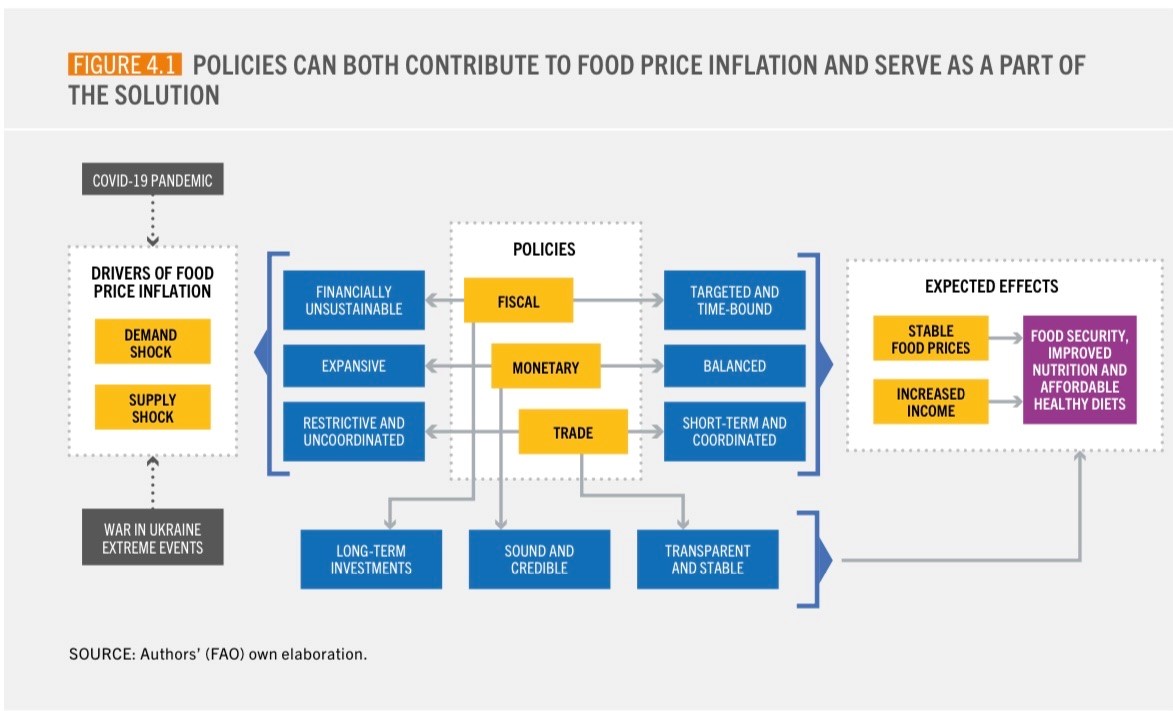
Macro-policy coherence: Governments must ensure fiscal and monetary policies are coherently implemented to stabilize markets. This includes prioritizing open and resilient trade to ensure food flows from surplus to deficit regions, a key factor in price stability.
(Source: https://www.fao.org)
National policy responses varied across different food security trajectories. Countries with deteriorating or fluctuating food security situations relied more heavily on price control measures and agricultural production subsidies than countries with more stable food security trajectories. Low food-insecure countries with stable or improving food security tended to adopt a mix of trade policy instruments, in contrast to high food-insecure countries where the use of such instruments was more limited. è Drawing on the experiences of countries during recent periods of food price inflation, several policy lessons emerge. These highlight practical measures that can help governments respond more effectively to future shocks, balancing immediate relief with long-term market resilience.
Policymakers can use targeted fiscal measures to support vulnerable populations’ economic access to food during economic shocks such as high food price inflation. However, these measures should be aligned with the broader policy landscape within a country. They should also be time-bound with clear exit strategies to prevent them from becoming permanent, making it difficult to redirect resources when no longer needed.
Targeted fiscal measures: Immediate interventions should include time-bound tax relief or subsidies specifically aimed at lowering the cost of nutrient-dense foods for low-income households. These measures must be monitored to ensure savings reach the end consumers.
Fiscal policy is often the first line of defence when governments respond to episodes of high food prices, using taxation and spending measures to mitigate the impact on livelihoods. During the COVID-19 pandemic, governments worldwide allocated approximately USD 17 trillion to various fiscal measures,1 including efforts to ensure an adequate food supply for their populations.
The scale of financial support directed towards the agricultural sector during the pandemic underscores the significant efforts made by governments to mitigate the crisis.
Price policies are among the most common policy responses implemented during food price inflation episodes. These policies are oriented to keep the price levels of specific food items below (or above) a certain threshold. They include initiatives such as price controls, which can provide immediate relief, or stimulate production and deliver a mid-term response – for example, by using minimum support prices (MSPs) to boost production of some commodities. Price policies are fiscally costly and distortive for food markets.
(Source: https://www.fao.org)
Consumer-directed fiscal measures, such as direct food and cash transfers, are commonly used by governments to support households during periods of high food prices. During times of shocks such as the COVID-19 pandemic, climate extremes, conflict or high food prices, governments can implement social protection programmes like food vouchers and cash transfers to help households to cope with these shocks. In high-income countries, they can also expand targeted subsidies and increase funding for food banks to support those experiencing food insecurity. Social protection programmes were scaled up as part of the fiscal responses to the pandemic and were a key element of government support to households.
Monetary policy, managed by central banks, regulates money supply to stabilize prices and control economic fluctuations, often through inflation targeting. The combination of pandemic-era fiscal stimuli and subsequent monetary tightening to control inflation has significantly exacerbated public debt levels, reducing countries’ ability to access financing including for investments for food security and nutrition.
Effective trade policies play a crucial role in stabilizing food prices and ensuring market resilience. During periods of high food prices, governments often adjust trade measures such as tariffs, quotas and export bans to protect domestic consumers. Reducing import tariffs can lower the cost and increase the supply of foods, thereby mitigating price spikes. Global trade policies on agricultural products have remained a key tool for food security in recent years, with major economies adjusting tariffs and trade relationships in response to shifting market dynamics and geopolitical tensions.
Strategic food reserves play a role in mitigating the impact of food supply shocks and ensuring national market stability; the two most common types are emergency and buffer stocks. Both are designed to mitigate food supply disruptions, but they serve distinct purposes. Emergency stocks reduce consumer vulnerability during supply disruptions or food price shocks in emergencies, whereas buffer stocks stabilize domestic market prices to avoid excessive volatility, benefiting both consumers and producers.
A well-functioning market information system, supported by timely and high-quality data, is important for fostering informed decision-making and improving the overall efficiency of agricultural markets.
Investment in systems: There is an urgent need for sustained, long-term investment in resilient agri-food systems. This includes improving data and information systems, enhancing infrastructure, and supporting institutional innovation to mitigate future price shocks and environmental disruptions.
Strategic investments in agricultural research and development (R&D) are reshaping global leadership in innovation, with shifting funding priorities across major economies. These investments can play a key role in reducing food prices through increases in agricultural productivity.
Investing in resilient transport infrastructure – including maritime corridors, port facilities and inland logistics networks – can enhance food supply chain efficiency and reduce the risk of price spikes caused by infrastructure bottlenecks. The stability of food supply chains increasingly depends on a handful of critical bottlenecks that facilitate the movement of key commodities. International trade of agricultural commodities is growing, increasing pressure on a small number of “chokepoints” – critical junctures on transport routes through which exceptional volumes of trade pass.
Adequate storage facilities, including warehouses and cold chains, allow farmers to store their produce and sell at more favourable prices, rather than being forced to offload at low prices during peak harvest periods. This reduces price volatility and ensures a more stable supply of agricultural products throughout the year, contributing to food security and nutrition. Moreover, improved storage minimizes post-harvest losses, particularly in developing countries where inadequate facilities result in significant food loss.
Investing in cold chain infrastructure is crucial for improving the availability and quality of nutritious foods, enhancing producer prices and reducing food loss. Sustainable cooling technologies, which offer low operational costs, are increasingly being adopted, especially for the early stages of the cold chain, such as removal of heat from the field and storage of large quantities of produce.
Investments in small and medium-sized enterprises (SMEs) in the midstream and downstream of agrifood systems play a critical role in rural economies by providing value chain opportunities for small-scale producers. These enterprises – which source, process, package and distribute food – are essential for increasing agricultural output, improving producer prices and reducing food losses along the value chain.
Structural measures are equally essential. Investments in food storage, transport infrastructure, and market information systems can reduce food losses, improve supply chain efficiency, and dampen future price volatility. Maintaining well-designed strategic reserves and enhancing market transparency contribute to more stable food markets and can be integrated into comprehensive risk management frameworks.
Social protection: Strengthening social protection programs (e.g., cash transfers, school feeding) is vital to protect vulnerable populations' purchasing power against inflation. effective responses to food price inflation should combine well-targeted fiscal measures, structural reforms, and coordinated policy actions. Short-term price interventions should be carefully calibrated to avoid market distortions and ensure long-term sustainability. In times of crisis, fiscal responses – such as cash transfers or temporary tax reductions – should be both targeted and time-bound, with clear exit strategies. Social protection programmes should be nutrition-sensitive and better designed to shield the most vulnerable while also accounting for the erosion of transfer value in high-inflation contexts.
The SOFI 2025 report serves as a stark reminder that poverty, hunger, and environmental instability are deeply intertwined, requiring global coordination beyond singular sector responses. This year’s report reaffirms that while food price inflation remains a pressing concern, it is not undefeatable. Sustained investments, strengthened policy coordination, greater transparency, enhanced policy focus on supporting healthy diets, and continued institutional innovation will be vital in building resilience to future shocks. The lessons of the past several years offer a roadmap for addressing both the immediate impacts of food price inflation on food security and nutrition, and the medium-term goal of achieving SDG 2 and affordable healthy diets for all.
Nguyễn Xuân Thắng
(Source: The article was published on the Environment Magazine by English No. IV/2025)
REFERENCES