
11/12/2025
The Project on "Emissions reduction in the crop production sector for the period 2025 - 2035, vision to 2050" has just been signed and issued by Acting Minister of Agriculture and Environment Tran Duc Thang in Decision No. 4024/QD-BNNMT dated September 29th 2025, with the goal of putting the crop sector into a low-emission orbit, ensuring national food security, and at the same time improving the competitiveness of Vietnamese agricultural products in the international market. At the same time, the project aims to promote sustainable agricultural development, adapt to climate change, and realize the commitment to net zero emissions by 2050.
1. Context and necessity of the Project
In the context of increasingly complex and unpredictable climate change (CC), which negatively impacts all aspects of economic and social life, the agricultural sector in general and the crop cultivation sector in particular are facing many enormous challenges, requiring strategic orientations and specific and timely actions to ensure the goal of sustainable development, effective adaptation to climate change and reduction of greenhouse gas emissions, contributing to environmental protection. In the world, reducing greenhouse gas emissions in agriculture - especially the crop cultivation sector - has been identified by the international community as one of the key solutions to respond to climate change. Many global mechanisms, commitments and initiatives have been established to support developed and developing countries in implementing many technical, financial and monitoring solutions in agricultural production to reduce emissions, typically: The Paris Agreement (2015) requires all countries to develop a plan for nationally determined contributions (NDC), in which most countries incorporate targets for reducing emissions from agriculture, including crop cultivation; The Intergovernmental Panel on Climate Change (IPCC) in its 5th and 6th Assessment Reports (AR5, AR6) emphasized the role of land management, water use, nutrition and crop diversification in reducing emissions CH₄ and N₂O - two main GHGs in crop production. Along with that, the “4‰” Initiative (4 per 1000) initiated by France at COP21 proposed to increase carbon accumulation in cultivated land, which is considered a sustainable and beneficial carbon neutral solution for farmers. Meanwhile, the Climate Smart Agriculture (CSA) Program developed by the Food and Agriculture Organization of the United Nations (FAO) and the World Bank (WB) has been applied by many countries to transform farming systems towards simultaneously achieving three goals: (i) Increasing productivity; (ii) Adapting to climate change; (iii) GHG emission reduction.
In Vietnam, according to the 2020 GHG inventory, emissions from agriculture account for more than 30% of total national emissions, with the crop sector alone contributing about 80%. In particular, traditional wet rice farming methods - which use frequent flooding and chemical fertilizers - are the largest source of methane (CH₄) emissions. This shows that if Vietnam's agriculture does not promptly transform in line with global trends, it is at risk of both suffering damage from climate change and losing its competitive advantage. On the other hand, at the 26th Conference of the Parties to the United Nations Framework Convention on Climate Change (COP26), the Prime Minister made a commitment to achieve net zero emissions by 2050. To achieve this goal, the agricultural sector in general and the crop cultivation sector in particular need to synchronously deploy solutions to transform farming methods, improve production efficiency, reducing emissions, protect the environment and ensure national food security.
Currently, in addition to rice, many other crop groups such as corn, cassava, soybeans, vegetables, and fruit trees have the potential to apply reducing emissions farming solutions to reduce fertilizer use, increase carbon absorption, improve soil health, save resources, and move towards sustainable production. However, reducing emissions farming activities are mainly implemented in the form of single models and projects, without a national program for overall guidance and support. Meanwhile, major agricultural consumption markets in the world are tending to tighten requirements related to carbon emissions, sustainability certification, traceability, and environmental protection. This shows that the slow implementation of reducing emissions production programs can make Vietnamese agricultural products face difficulties in export, reducing competitiveness, especially in the context of deep economic integration and implementation of new-generation Free Trade Agreements (FTAs).
Implementing reducing emissions farming is not only an urgent requirement to adapt to climate change, but also brings many practical and comprehensive benefits to farmers, businesses and the country. The application of reducing emissions farming processes such as alternate wetting and drying (AWD), integrated nutrient management, organic farming, precision agriculture, and climate-smart agriculture will significantly reduce the amount of agricultural inputs such as chemical fertilizers, pesticides and irrigation water, thereby reducing production costs, increasing profits for farmers; improving soil health, protecting biodiversity; reducing environmental pollution and improving the quality of agricultural products. In the long term, reducing emissions in agricultural production is the way to build the image of a Vietnamese agriculture that is responsible for the environment, has a high level of cultivation and is capable of deeply integrating into the global agricultural value chain. This is also an important basis for Vietnam to gradually approach and effectively participate in the carbon credit market, both voluntary and compulsory, through the formation of carbon credit projects in agriculture. Thereby, not only creating new financial resources for people and businesses, but also promoting green transformation in the entire agricultural sector.
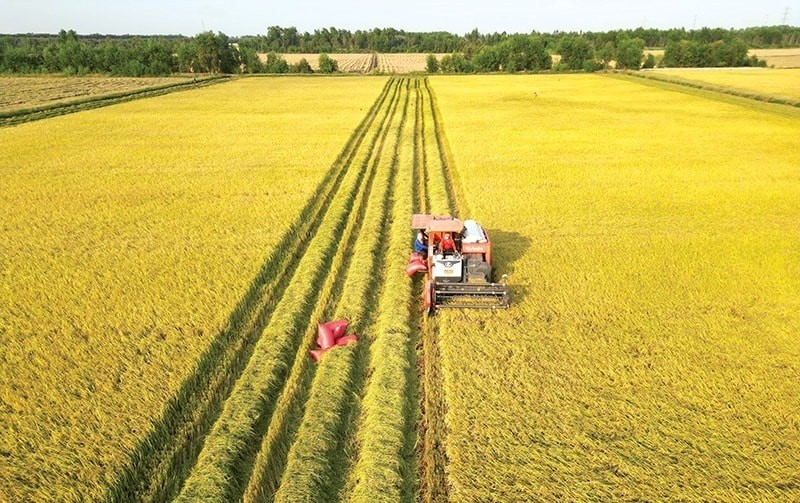
The implementation of the Project will contribute to ensuring national food security and promoting the competitiveness of Vietnamese agricultural products in the international market.
However, to do that, there needs to be unified leadership from the state management agency, through the issuance of a comprehensive program with a long-term vision, integrating solutions on technology, policy, finance, science and technology, training, communication and international cooperation. The program must clearly identify key crop groups with reducing emissions potential; develop a set of criteria and technical guidelines; contribute to the establishment of a transparent and effective emission monitoring and assessment mechanism... From the above analysis, it can be affirmed that the development and implementation of the Project on emissions reduction in the crop production sector for the period 2025 - 2035, with a vision to 2050 in Vietnam is an objective and urgent requirement, in line with the Party's policies, the State's legal policies and the global agricultural development trend. This is a key, long-term task that needs to be organized and implemented systematically and synchronously, with a specific roadmap, linked to the strategy for sustainable crop development, adaptation to climate change, and enhancing the position of Vietnamese agricultural products in the international market.
2. Political, legal and practical basis of the Project
2.1. Political and legal basis
The project closely follows the spirit of Resolution No. 57-NQ/TW dated December 22, 2024 of the Politburo on "Breakthrough in science, technology, innovation and national digital transformation", considering the transformation of production models towards green and smart as one of the strategic pillars of national development. In parallel, the Law on Environmental Protection 2020 and the Law on Crop Production 2018 set out clear requirements for integrating GHG emissions, climate change adaptation and efficient resource use into the process of organizing agricultural production. The project is also a specific step in implementing national strategies and programs such as: National Strategy on Climate Change to 2050 (Decision No. 896/QD-TTg dated July 26, 2022) - orienting reducing emissions in agriculture as one of the top priority areas; National Strategy on Green Growth for the period 2021 - 2030, vision to 2050 (Decision No. 1658/QD-TTg dated October 1, 2021) - requires integrating green production and developing carbon markets into all economic sectors, including agriculture; Strategy for Sustainable Agricultural and Rural Development for the period 2021 - 2030, vision to 2050 (Decision No. 150/QD-TTg dated January 28, 2022) aims to transform crop production systems towards ecology, circulation, and low emissions.
In particular, the United Nations' adoption of the 2015 Paris Agreement and Vietnam's commitment to achieving net zero emissions by 2050 at COP26 have created clear legal and political pressure on all socio-economic sectors. The crop sector, characterized by its large emissions but with the potential to absorb and offset GHG, is identified as a "strategic link" in implementing NDC (Nationally Determined Contribution) commitments. In addition, legal documents such as Decree No. 06/2022/ND-CP dated January 7, 2022 of the Government on GHG emission reduction and ozone layer protection; Decree No. 119/2025/ND-CP amending and supplementing the implementation mechanism, creating a legal foundation for implementing the measurement - reporting - verification (MRV) system and developing the carbon credit market; Decision No. 232/QD-TTg dated January 24, 2025 of the Prime Minister on developing the domestic carbon market... has opened up a new space for the crop sector to directly participate in the carbon finance mechanism, creating a strong economic driving force for production model transformation.
2.2. Practical basis
The project is an inevitable response to the practical context of Vietnam's crop cultivation sector, which is facing many enormous environmental, economic and market challenges.
First, reducing emissions pressure from production status. According to the results of the national GHG inventory in 2020 (based on 2016 baseline data) published by the Institute of Agricultural Environment, Vietnam's total GHG emissions reached about 454.6 million tons of CO2 equivalent, nearly double that of 2010, of which the agricultural sector accounted for about 116.51 million tons of CO2 equivalent. Notably, crop cultivation is the largest emitting sector, accounting for about 80% of the industry's total emissions, due to frequent flooding and unreasonable use of fertilizers and pesticides. Many current reducing emissions models such as alternate wetting and drying (AWD), integrated nutrient management or organic farming have only been implemented on a small scale, lacking a mechanism to guide and replicate on a national scale.
Emissions from the agricultural sector (crop and livestock farming)
|
Field |
Emissions (million tons of CO2 equivalent) |
Share in agriculture (%) |
|---|---|---|
|
Wet rice cultivation |
77,346 |
66.38 |
|
Digestion of animal feed |
15,781 |
13.54 |
|
Waste management |
7,190 |
6.18 |
|
Burning waste by-products |
1,278 |
1.09 |
|
Emissions from land (direct and indirect) |
12,618 |
10.84 |
|
Other |
2,297 |
1.97 |
|
Total |
116,51 |
100% |
Second, limitations in techniques and monitoring tools. Currently, the MRV system for crop production in Vietnam is still in its infancy, mostly at the qualitative level, without a standardized set of measurement tools, leading to difficulties in proving reducing emissions results. This not only affects the national GHG inventory but also makes it difficult for the agricultural sector to access the carbon credit market, which is growing strongly globally.
Third, socio-economic barriers. Vietnam's agricultural production is still mainly small-scale, fragmented, and low-income, so the ability to invest in technological innovation is limited. Farmers and local managers generally do not have full awareness of the benefits of low-emission production, leading to a reluctance to change farming practices. Meanwhile, agricultural enterprises and cooperatives lack guidance and financial support to participate in the carbon value chain.
Fourth, pressure from the international market. The demand for agricultural products in major markets is shifting strongly towards “green” and “climate-responsible”. Standards related to carbon emissions, traceability, and sustainability certification are increasingly becoming mandatory. If the production model is not transformed soon, Vietnamese agricultural products will face the risk of being eliminated from the global supply chain or subject to border carbon taxes - such as the EU’s Carbon Border Adjustment Mechanism (CBAM).
Fifth, requirements for production quality and resource protection. Domestic crop production still has many shortcomings: low efficiency of land and water use; high input costs; unstable quality of agricultural products; degraded land and declining biodiversity. These problems not only hinder competitiveness but also weaken the resilience of agricultural systems to climate change.
All the above factors have created a “double pressure” - both from within (production efficiency, environment, farmers’ income), and from from external drivers (international commitments, market requirements) - forcing the crop sector to have a comprehensive, long-term program to restructure towards low emissions. In that context, the promulgation of the Project on“emissions reduction in the crop production sector” is an inevitable, strategic step to shape the future of sustainable development of Vietnamese agriculture.
3. Project objectives and vision
The project is implemented nationwide in the period from 2025 to 2035, aiming to synchronously deploy solutions to promote the transformation of crop production systems towards low emissions; adapt to climate change; improve production efficiency; improve livelihoods for people and sustainable development, focusing on a number of key crops with high emissions reduction potential such as rice, cassava, sugarcane, coffee, bananas... Thereby helping to improve the competitiveness of the crop industry; ensure national food security; gradually form a modern, ecological agriculture with good resilience to the impacts of climate change, contributing to the implementation of Vietnam's commitments in the NDC. Specifically, by 2035, the crop sector strives to reduce at least 15% of total GHG emissions (CO2 equivalent) compared to the base year 2020; build and develop the "Low Emission" brand for products of the crop industry; Each province organizes the implementation of at least 1-2 reducing emissions crop production models that can be replicated; pilots at least 15 farming models that can develop carbon credits that meet the requirements of international organizations. Along with that, develop and promulgate at least 5 reducing emissions production technical packages applicable to key crop groups; form a database of emissions in crop cultivation that is synchronously connected with the National Registration System; organize training and coaching on techniques, policies, common awareness and emission measurement tools for at least 3,000 grassroots technical staff, agricultural extension workers, farmers and businesses nationwide; develop at least 5 sets of communication documents, disseminate knowledge, and promote the change of farmers' production behavior towards reducing emissions.
By 2050, the crop production sector will develop towards low emissions, ecology and modernity, becoming an important pillar in the green transformation of national agriculture. Crop production activities will be organized according to a circular value chain, strongly applying digital technology and smart agriculture, ensuring efficient use of land, water and input resources, while controlling, absorbing and compensating for emissions in a substantial manner. The whole sector strives for 100% of the main crop area to apply sustainable farming techniques; form a digital database on emissions in crop cultivation, synchronously connected with the national monitoring system; build and popularize the "Low Emission" label for key agricultural products; become a pioneer country in the region in developing climate-responsible agricultural products, creating a green competitive advantage in the international market and actively contributing to the committed net zero emissions target.
4. Tasks and some key solutions
4.1. Main tasks of the Project
The project identifies a series of specific tasks, first of all, restructuring production, from ineffective rice areas to high-value upland crops or combining with aquaculture, and at the same time testing the model of "one rice crop - one color crop", to improve soil, reducing emissions. With perennial crops, priority is given to developing varieties that are both economically efficient and have good carbon absorption capacity. Along with that, standardizing reducing emissions cultivation technical packages, with many measures that have been identified, including: Alternating flooding and drying in rice cultivation; applying the improved intensification system (SRI); reducing the amount of inorganic fertilizers by increasing organic, microbial and slow-release fertilizers; limiting the use of chemical pesticides with biological solutions... Digital technology will also be used to monitor soil moisture, regulate fertilizers and pesticides, contributing to increasing efficiency and reducing emissions.
Another key task is to develop value chain production models. Accordingly, demonstration models will be deployed in concentrated commodity production areas, linking farmers - cooperatives - enterprises. These models will apply low emission techniques while ensuring a measurement - reporting - verification (MRV) mechanism according to international standards. In parallel, a national database on crop emissions will be established, integrating information by ecological region, crop and applied techniques. This will be the foundation for linking with the national GHG inventory system and serving to make data transparent when participating in the carbon market.
In addition, training and communication work is given special attention. At least 3,000 technical staff, extension officers and key farmers will be trained on emission reduction farming methods, MRV and carbon credits. Along with that, 5 sets of standardized communication materials will be compiled and widely disseminated to change farmers' production behavior.
4.2. Key solutions
To achieve the above objectives, the Project proposes the following 7 key solutions:
First, strengthening the state management capacity on reducing emissions in crop cultivation: First of all, focusing on perfecting institutions, policies and support tools to review, amend and supplement relevant documents, including integrating reducing emissions GNK requirements into strategies, plans, programs and projects in the crop cultivation sector; developing and implementing financial incentive policies for farmers, cooperatives and enterprises to convert to reducing emissions cultivation; developing and promulgating a set of criteria on reducing emissions cultivation and developing incentive and support policies. In addition, enhancing the role of directing, coordinating and supervising the implementation of the Project at the central and local levels, including strengthening decentralization and empowering localities in selecting and developing models, expanding the applied area, developing support policies and mobilizing resources for implementation; holding regular meetings, summarizing and summarizing each stage; Strengthening field inspection and supervision to promptly remove difficulties and obstacles for localities; expanding the social supervision role of organizations, associations, cooperative alliances, community organizations, and people in the process of implementing the Project at the local level. On the other hand, perfecting the system of management tools, monitoring, and evaluating the effectiveness of the Program through issuing technical guidance documents, instructions, forms, monitoring processes, and periodically evaluating the results of reducing emissions implementation; actively applying digital technology in emission monitoring, raw material area management, traceability and reducing emissions output statistics; building and operating a unified monitoring and evaluation system from the central to local levels, including a set of reducing emissions measurement indicators and production model conversion results.
Second, on science, technology and technology transfer: Promote research, improve and standardize reducing emissions cultivation technical packages, suitable for each crop, ecological region and production conditions; apply some scientific measures such as: Using by-products to produce biochar, organic fertilizers, introducing water fern into the cultivation system...; apply digital technology, sensors, artificial intelligence, precision agriculture to optimize water and fertilizer management and monitor emissions in cultivation; develop practical demonstration models at local level to disseminate new techniques, organize "learning fields" and train farmers; transfer technical advances through the agricultural extension system, cooperatives, and agricultural service enterprises.
Third, on production organization and value chain: Promote production restructuring according to the value chain, linking reducing emissions production with processing, consumption, traceability and carbon credits; encourage the development of cooperative economic models, cooperative groups, and cooperatives as the core in reducing emissions farming organization; support businesses to invest in raw material areas, apply the emission co-management model between farmers and purchasing units; implement carbon traceability (footprint), support reducing emissions agricultural product branding.
Fourth, on building data systems and emission management: Build and operate a national database system on emissions in crop production, integrated by region, crop and technique. Based on the MRV system for the crop sector that has been and is being implemented, build a complete MRV system, ensuring transparency, synchronization and the ability to integrate with international standards. At the same time, apply remote sensing technology, GIS, digital reporting system to effectively monitor and supervise models and the entire program; connect data with the national GHG inventory system to serve statistics, management and international reporting.
Fifth, on financial resources and markets: Mobilize diverse resources, including: (i) State budget, science and technology career capital, agricultural extension, national target programs, playing a "leading" role, investing in fundamental components such as policies, databases, training, pilot models, agricultural extension, local supervision...; (ii) Private capital, socialized capital in production organization, infrastructure development, technical services, agricultural product purchasing, focusing on value chain linkage activities, investing in farming equipment, expanding the area applying reducing emissions farming processes, operating the MRV system, carbon traceability system, applying digital technology, processing facilities, preserving reducing emissions agricultural products; (iii) International funding sources, ODA capital, climate capital and global reducing emissions programs, prioritizing allocation for components on MRV, technology transfer, carbon credit testing, training, capacity building... In addition, expanding the market for reducing emissions agricultural products, prioritizing markets with high environmental requirements such as the EU, Japan, and North America.
Sixth, on communication training and awareness raising: Compile and disseminate training materials, technical handbooks, and reducing emissions cultivation technical guidance tools for officials and farmers; organize training courses for agricultural extension officers, managers, cooperatives, and core farmers; coordinate with mass media agencies, social networks, organize fairs and forums to promote and spread the reducing emissions cultivation model; integrate reducing emissions production content into agricultural vocational training programs, popularize knowledge about carbon credits and circular agriculture.
Seventh, on cooperation and integration: Promote cooperation with international organizations in scientific research, technical training, policy consulting; build carbon projects; connect international credit markets. At the same time, actively participate in regional and global forums and initiatives related to reducing emissions agriculture and carbon markets (FAO, CSA, The ASEAN Climate Smart Agriculture, Hub...) ; promote learning and absorbing international experiences, technical standards, public-private partnership models in developing low-carbon agriculture, flexibly applying them to Vietnam's conditions.
5. Conclusion
It can be said that the development and promulgation of the Project on Emissions reduction in the crop production sector for the period 2025 - 2035, with a vision to 2050 is an objective and urgent requirement, consistent with the Party's guidelines, the State's legal policies and the global agricultural development trend. The Project is an affirmation that Vietnamese agriculture is not only an economic pillar but also a pioneer in environmental protection, aiming for green and sustainable agriculture. With high political determination, consensus, intellectual contributions, experience and common voice from experts, scientists, local representatives, businesses as well as international organizations, the Project opens up a new path for the crop production sector, towards low emissions, modernity and the ability to deeply integrate into the global value chain. This is also a strategic orientation for the crop sector in the coming decade, contributing significantly to realizing the commitment to achieve net zero emissions by 2050, making Vietnam a model of low-emission, sustainable, and responsible agriculture to the international community in the fight against climate change.
Nguyễn Thị Thu Hương
(Source: The article was published on the Environment Magazine by English No. IV/2025)