
11/12/2025
Agriculture plays a pivotal role in ensuring food security, rural livelihoods, and economic growth, yet it also exerts significant pressure on the environment through greenhouse gas emissions, land degradation, and water pollution. This paper examines the dynamic relationship between agricultural development and environmental sustainability in Vietnam, emphasizing the opportunities and challenges of transforming the agricultural sector toward a green, low-carbon future. Green growth in agriculture plays a crucial role in the ongoing economic restructuring towards sustainability, given its specific approach to resource utilization to fulfill developmental needs.
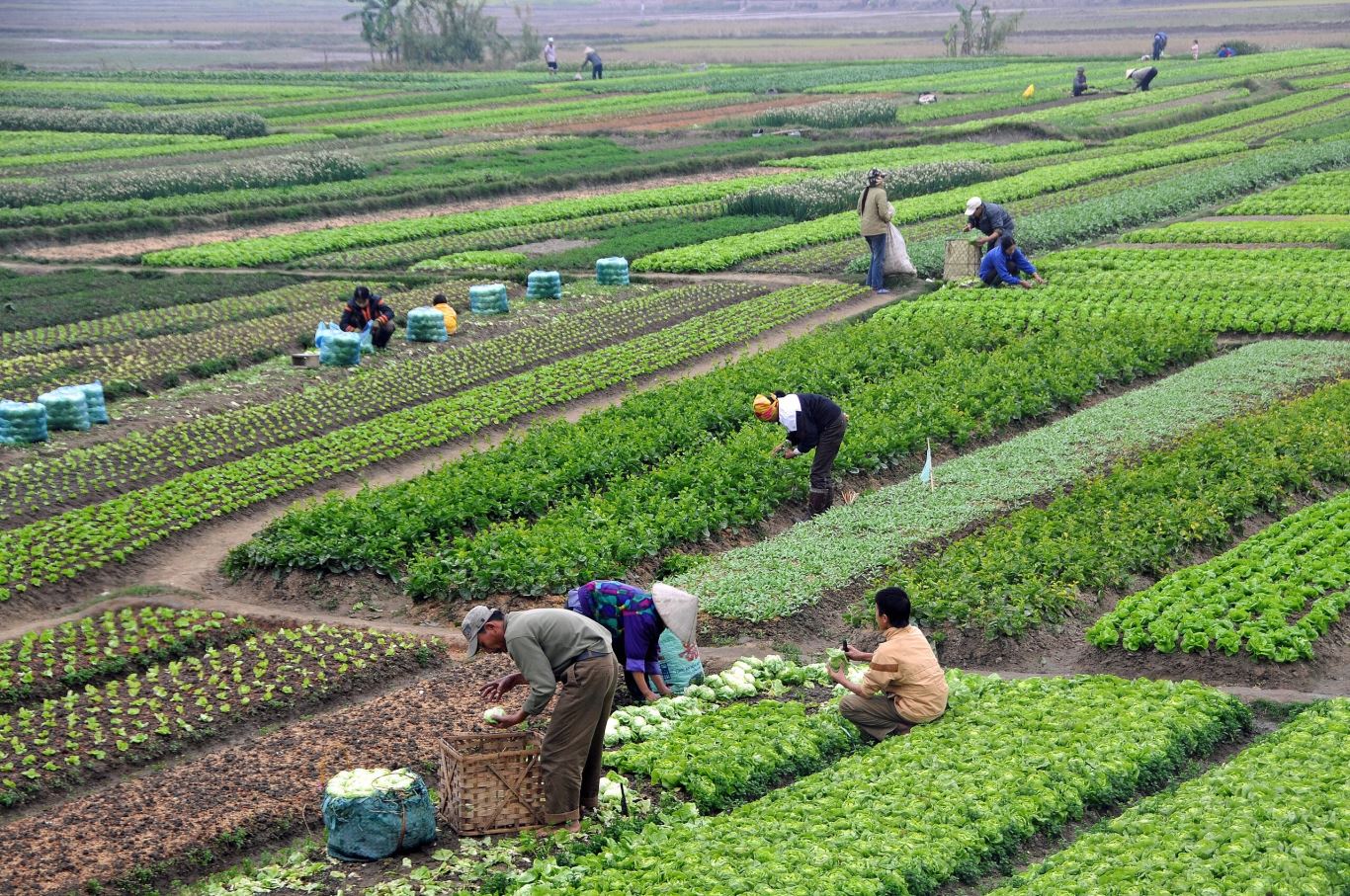
Green growth in agriculture plays a crucial role in the ongoing economic restructuring towards sustainability
1. Green growth - a pivotal aspect of agriculture sustainable development
Agriculture and the environment are intrinsically linked. As the backbone of rural economies, agriculture depends on natural resources - soil, water, and biodiversity while simultaneously shaping them. However, intensive agricultural practices, expansion of croplands, and misuse of chemical fertilizers have led to soil degradation, biodiversity loss, and water contamination across many developing nations, including Vietnam. Vietnam’s agricultural success story from a food-deficit country to a global exporter of rice, coffee, and aquaculture products - has come with environmental trade-offs.
Vietnam has implemented various solutions to foster green growth in agriculture, yielding tangible results. However, a number of issues need to be resolved, namely the awareness of converting green growth models in agriculture among managers and producers, the collection and treatment of waste, the fear of applying microbial organic fertilizers widely, the legal system on green growth in agriculture, the ineffective implementation of the policy of land consolidation, land exchange, and forming consolidated large-scale fields. Consequently, there is a need to enhance awareness and strategy, supplemented by refining institutions and policies, and a focus on investing in resource development to meet the demands of green growth in Vietnamese agriculture.
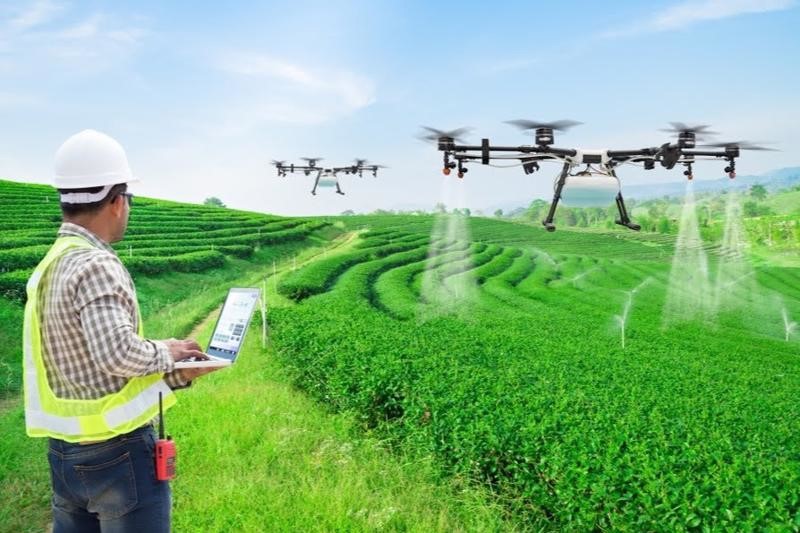
Smart irrigation, remote sensing, and AI-based yield prediction help optimize inputs and reduce waste
For Vietnam, green growth is a pivotal aspect of sustainable development, contributing significantly to the implementation of the National Strategy on Climate Change. The National Strategy on Green Growth for the period 2021-2030, with a vision for 2050, emphasizes economic restructuring, innovation in growth models, and increased competitiveness. This strategy aligns with the 10-year Socio-Economic Development Strategy 2021 - 2030, national planning systems, and industry and sector development strategies. Green growth serves as a pathway to sustainable development, directly reducing greenhouse gas emissions and promoting a long-term carbon-neutral economy. It aims to reduce human vulnerability to climate change, foster responsible individual lifestyles, cultivate a green living culture for future generations, and build a civilized, modern society in harmony with nature. The strategy encourages investment in advanced technology, digital transformation, smart and sustainable infrastructure, fostering private investment in the green economy through innovation and a commitment to national prosperity and sustainability. The strategy outlines four crucial goals: (i) reducing greenhouse gas emissions and promoting clean and renewable energy use; (ii) greening economic sectors; (iii) promoting sustainable consumption and lifestyles; and (iv) facilitating the transition process with principles of equality, inclusion, and enhanced resilience. Achieving these goals requires concerted efforts from all sectors to transition and restructure, enhancing resource efficiency, minimizing environmental pollution, and improving competitiveness. In the context of agriculture, green growth is considered an effective development model that ensures economic growth while responsibly exploiting development resources and addressing environmental concerns. The agricultural sector aims to transform its development model towards an environmentally friendly, low-emission green model. Although progress has been made, this transformation necessitates substantial investments in technology and human resources. Limited national resources pose challenges, including the lack of effective government guidance and public initiative in the transformation process.
2. The environmental footprint of Vietnam’s agriculture
Greenhouse Gas Emissions (GHG): Agriculture contributes nearly 30% of Vietnam’s total greenhouse gas emissions, mainly from rice cultivation, livestock, and fertilizer use. Methane (CH₄) from flooded rice paddies is the largest contributor, while nitrous oxide (N₂O) from nitrogen fertilizer adds to the problem. Implementing alternate wetting and drying techniques can cut methane emissions by 30 - 50% without reducing yield, offering a promising adaptation pathway for the Mekong Delta.
Land and water degradation: Unsustainable land use, monocropping, and over-application of agrochemicals have degraded soils and polluted waterways. In the Red River and Mekong Deltas, excess fertilizer runoff contributes to eutrophication, while pesticide residues harm aquatic ecosystems. Sustainable land management, integrated nutrient management, and organic farming are emerging as critical tools for restoring soil fertility and maintaining ecosystem services.
Biodiversity loss: Agricultural intensification has reduced genetic diversity in traditional crops and livestock breeds. The conversion of natural habitats for agriculture has also contributed to biodiversity decline. Promoting agro-ecological farming systems and conservation agriculture can help reconcile production with biodiversity protection.
Climate change and agricultural vulnerability: Vietnam is among the countries most vulnerable to climate change impacts. Rising temperatures, saltwater intrusion, droughts, and floods threaten yields and rural livelihoods. The Mekong Delta, which accounts for over half of Vietnam’s rice production, is facing salinity intrusion due to sea-level rise and reduced upstream flows. Meanwhile, the Central Highlands experience increasing droughts, affecting coffee and pepper crops. Adaptive agricultural models such as shifting cropping calendars, diversifying crops, and adopting stress-tolerant varieties are necessary to ensure resilience.
3. Promoting green growth in agriculture
Green growth is considered a crucial component of sustainable development, emerging as a developmental trend in many countries by redirecting the economy towards “green” and environmentally responsible objectives. The concept of green growth revolves around mitigating conflicts between economic growth and environmental quality, making it particularly pertinent to the agricultural sector, given its heavy reliance on natural capital, utilizing 60% of global ecosystems. The green growth presents opportunities to contribute to sustainable economic, social, and environmental development. Green growth within the agricultural sector is a crucial endeavor to effectively address climate change, progress towards a sustainable society, and meet the demands of the economic system.
Getting to understand green growth in the agricultural sector involves a growth process that ensures a balance between economic benefits and the potential of the environmen, maintaining the capacity of the agricultural ecosystem. This can be approached from a 3P (People - Planet - Profit) perspective, emphasizing the role of humans in choosing appropriate production and consumption methods to preserve the human capital and natural assets of people and agro-ecological systems. It involves maintaining economic efficiency, addressing the need to improve living standards, and reducing poverty through enhanced management capacity, policy support, and innovation in green technology. Thus, for the agricultural sector, green growth initiatives have been expressed in agricultural and rural development policies of countries, with the basic principle of ensuring a healthy ecosystem and economy through the conversion to environmentally friendly agricultural farming methods. This includes considering the carrying capacity and environmental capacity of each territory. Simultaneously, it prioritizes investment and integration to improve energy efficiency, apply new technology, and promote the transformation of green and environmentally friendly value chains.
Awareness of green growth in agriculture has positively improved, gradually changing production and consumption behavior associated with the implementation of the scheme on restructuring the agricultural sector, developing a comprehensive agriculture towards modernity. In modern times, the economic structure is shifting towards promoting advantages, being suitable for the market, and adapting to climate change. Green growth investment has been integrated into the socioeconomic development plans of localities and the development strategy of the agricultural sector. As a result, many green, clean, safe production models have been replicated, with production activities conducted in line with GlobalGap, VietGap standards, etc., and have gradually become familiar to farmers.
Agricultural development has recently posed multiple potential challenges. Most production models rely on overexploitation of natural resources, leading to natural resource degradation, environmental pollution, and negative impacts on the environment, affecting the quality of growth and people's lives. Unplanned production causes infrastructure overload, excess supply of products. In addition, the lack of consumer awareness and transparency of product information, as well as a shortage of mandatory regulations for selling VietGAP products, make green and safe processed products difficult to expand. Appropriate awareness of the nature of the circular economy from design to implementation in localities, agricultural sector, people, and the management is needed to issue sufficient legal frameworks. The skills and knowledge in implementing green and circular production processes often take place spontaneously; therefore, they do not significantly motivate the transition process.
3. Strategy to promote green growth in agriculture in Vietnam
To create a legal foundation for the green growth process towards sustainable development of the country, the Government has issued national strategies on green growth for the periods 2011-2020 and 2021-2030 with solutions to reduce greenhouse gas emissions, boost green production and lifestyle, and promote sustainable consumption. Encouraging and promoting green growth in agriculture are among the solutions to ensure sustainable agricultural development on the basis of managing resources of natural capital, reducing negative impacts on the environment throughout the entire chain of ecology, enhancing the provision of environmental services and conserving biodiversity. At the same time, enhance the ability to access and benefit comprehensively and equally in society.
Green growth policies in agriculture contribute to concretizing and motivating the implementation of green measures in practice. They ensure a balance between the environment and economic growth through various economic measures, techniques, and monitoring of farming and animal husbandry processes and methods. This includes measures to promote research, development, technology application, dissemination, and awareness raising, among others.
Policy support for green growth is gradually improving, with a focus on encouraging investments and eco-friendly production. The aim is to raise awareness and gradually shift the behavior of both producers and consumers while innovating farming and animal husbandry methods in accordance with green standards. The strategy for promoting green growth is integrated into programs and plans aimed at developing the agricultural sector and localities. This includes the implementation of agricultural restructuring and a shift in the growth model towards quality and increased value.
4. Challenges in implementing green growth in agriculture
Though there are domestic and international opportunities that Vietnam's agricultural sector can take advantage of to make breakthroughs and effectively deploy solutions towards “green” goals in agricultural development, its transformation towards the model of green growth in agriculture still faces difficulties, as follows: The awareness of converting green growth models in agriculture among managers and producers have been changed not much. This is reflected in the results of agricultural development, which still maintains a growth model that follows the abuse of chemicals and overexploitation of resources, leading to ecological imbalance. Every year, up to 50-70% of inorganic fertilizers are not absorbed by plants and are released into the environment. Additionally, the collection and treatment of waste still contain multiple shortcomings. Livestock waste contains toxic substances causing greenhouse effects and the risk of environmental pollution if used without proper technical collection and treatment measures. Lack of awareness and implementation, combined with the impact of climate change, will be a major obstacle to the process of transforming the Vietnam Social Sciences growth model.
Most farming households maintain traditional agricultural models, focusing on using fertilizers and pesticides from inorganic roots to increase productivity, not strictly following the safety principles of using pesticides “Right drug - Right dose - Right time - Right way”, affecting the quality of agricultural products, health, and the environment. The legal system on green growth in agriculture is still in the process of being completed, and some policies are not effectively implemented. The organization and implementation of transforming the agricultural growth model are mainly at local level, so it has not been able to mobilize all sectors of society to participate in the process. There are state policies and a number of small pilot models, but they have not become a driving force for the development of the entire industry. Agriculture has to compete fiercely with other industries and fields in getting resources for growth, in which financial resources to implement green growth solutions in agriculture mainly depend on the state budget. The concretization and implementation of policies to support production and business, linking production with consumption of safe agricultural products and foods are still slow, and output and scale are limited. The staff in charge of managing agricultural and fishery activities at district and commune levels are insufficient in number and quality, leading to multiple difficulties in directing, administering, and implementing policies and mechanisms. The ineffective implementation of the policy of land consolidation, land exchange, and forming large fields poses challenges that cause difficulties to the process of reorganizing production and the ability to apply scientific and technological advances to form raw material areas for processing and consumption lines.
Apart from achievements, the collective economy still has many limitations, and its development is not commensurate with its potential and advantages due to a lack of resources to implement policies, and some policies being inconsistent with the situation. Conditions for accessing and complicated procedures lead to a low rate of agricultural cooperatives accessing the benefits from the policy. Therefore, many cooperatives lack capital and are not supported with land to use for housing their headquarters, warehouses, and factories to organize production, especially for preliminary processing.
In fact, high-tech applications are mainly concentrated at the household and cooperative scale, and they have not been able to attract businesses to invest in. Vietnam's transfer and sharing of scientific and technological data are still limited, leading to reduced effectiveness of the policymaking process.
Organizations and officials at district and commune levels who conduct quality management and food safety are usually not sufficient. Resources at localities are not sufficient for the full conducting of food safety management and of inspection as assigned and decentralized to. Effective forms of production organization and linkage are not really stable. Linkages across the value chain to promote mechanization and apply high technology to reduce intermediate costs and increase added value are not yet popular. Inter-regional and inter-industry connections in many localities and industries are still fragmented. There are multiple difficulties regarding input materials and output from abroad, and increased prices of food and fertilizers. The fishery sector faces difficulties due to increased gasoline prices.
The above-mentioned main challenges are significant barriers in the process of transforming the growth model in agriculture to a green one. Therefore, in the future, the agricultural sector needs to take advantage of every opportunity to accelerate the transformation process, prioritize restructuring, and form centralized raw material areas based on environment- friendly agricultural models to improve productivity, quality, and competitiveness of agricultural products, securing the rapid and sustainable development of the agricultural economy.
4. Some solutions to promote green growth in agriculture in Vietnam
To capitalize on opportunities for promoting green growth in agriculture and addressing existing challenges, it is essential to implement comprehensive solutions aimed at enhancing growth quality and competitiveness towards a carbon-neutral economy by 2050. One key solution involves a shift in awareness and thinking regarding agricultural economic development, facilitating deep integration. This entails the gradual transition from small, unfocused economic models to farm economic models and production of cooperatives. The foundation for reshaping the agricultural economic structure lies in farm economy and cooperatives, leading to the establishment of specialized areas based on the access to green landscape. This approach fosters the development of the processing industry and agricultural production services, serving as a driving force for building new rural areas.
The agricultural sector must integrate the outcomes of training, career changes, agricultural restructuring, investment in infrastructure, utilization of capital, and adoption of advanced techniques in agricultural cultivation, animal husbandry, and aquaculture. Step by step, it should support and collaborate with enterprises involved in processing and consumption of products linked with service and production systems along the market value chain. Improving the institutional and policy frameworks, with a particular emphasis on prioritizing breakthrough policies, is crucial to creating a “green” and “circular” investment and business environment. Resource optimization, including investment in green science and technologies, is necessary to promote the application of new scientific and technological achievements in production, enhancing productivity while preserving environmental resources.
The establishment of mechanisms to enforce production processes adhering to ecological, organic, circular, and low carbon emissions standards and regulations is imperative. Proactive investment of financial resources in green growth in agriculture is pivotal. This involves the creation of mechanisms to mobilize private financial resources and deeply involve the private sector’s participation in the transformation into a green growth model. Additionally, mechanisms ensuring effective investment in agricultural and rural development, aligned with local capacity and available resources, are crucial. Priority solutions include the promotion of agricultural insurance, increased investment capital for developing production infrastructure, support for transitioning farming methods and agricultural restructuring, and integrating vocational training with support to the people’s livelihoods.
The application of digital agriculture, precision farming, and IoT-based monitoring systems is transforming agricultural practices in Vietnam. Smart irrigation, remote sensing, and AI-based yield prediction help optimize inputs and reduce waste.
Investment in green technologies such as biogas digesters, organic fertilizers, and low-emission livestock systems contributes both to emission reduction and rural energy security.
Empowering farmers through education, extension services, and financial incentives is key to mainstreaming sustainable practices. Cooperative models, public-private partnerships (PPPs), and climate-resilient value chains can help farmers access technologies and markets that reward sustainability.
Integrate climate and environmental indicators into agricultural planning to ensure that productivity gains do not come at the cost of ecosystem degradation. Expand green finance and carbon credit mechanisms to incentivize low-emission and regenerative farming. Promote research and data sharing on soil health, water quality, and biodiversity impacts. Strengthen international cooperation under frameworks such as the UNFCCC, FAO’s climate-smart agriculture program, and ASEAN’s Sustainable Agrifood Systems Initiative.
Sustainable agriculture is both an environmental necessity and an economic opportunity for Vietnam. The transformation toward green, climate-smart agriculture requires a holistic approach integrating technology, policy, and social innovation. By embedding environmental protection into every stage of agricultural development, Vietnam can achieve the dual goals of food security and ecological sustainability, setting a model for green transformation in the Global South.
Thu Thảo
(Source: The article was published on the Environment Magazine by English No. IV/2025)
REFERENCES
1. https://www.mard.gov.vn/en
2. https://agriculture.vn
3. https://en.vietnamplus.vn
4. https://vietnamnews.vn
5. https://vietnam.vnanet.vn